










Most people think air pollution happens outside. Think smog on highways. Dust from construction sites. Exhaust fumes on busy streets. The natural response is to go indoors, close the windows, and wait.
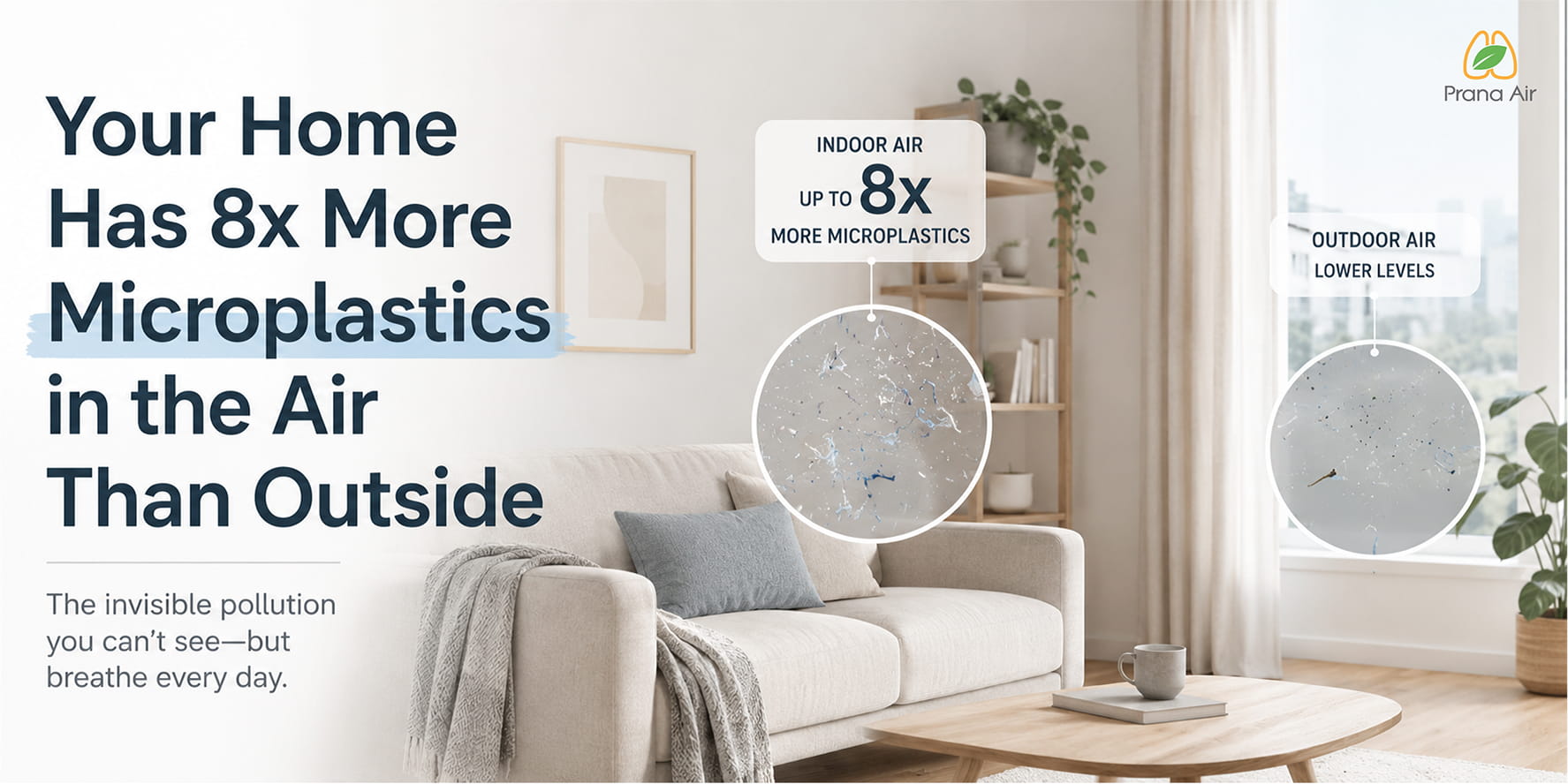
That instinct makes sense, but it's incomplete. There is a type of air pollutant that doesn't follow outdoor air quality rules. It doesn't decrease when you close your doors. In many cases, staying indoors actually increases your exposure to it. Most standard air quality monitors don't measure it. Yet peer-reviewed research from Europe, North America, and Asia shows that indoor microplastics are present at levels up to eight times higher than outdoor air.
Indoor microplastics are tiny synthetic fibers from everyday household materials. They build up in enclosed spaces where fresh air is limited. Understanding what they are, where they come from, and how they affect your health is essential. This knowledge helps you protect yourself and your family from this invisible threat.
What Are Airborne Microplastics?
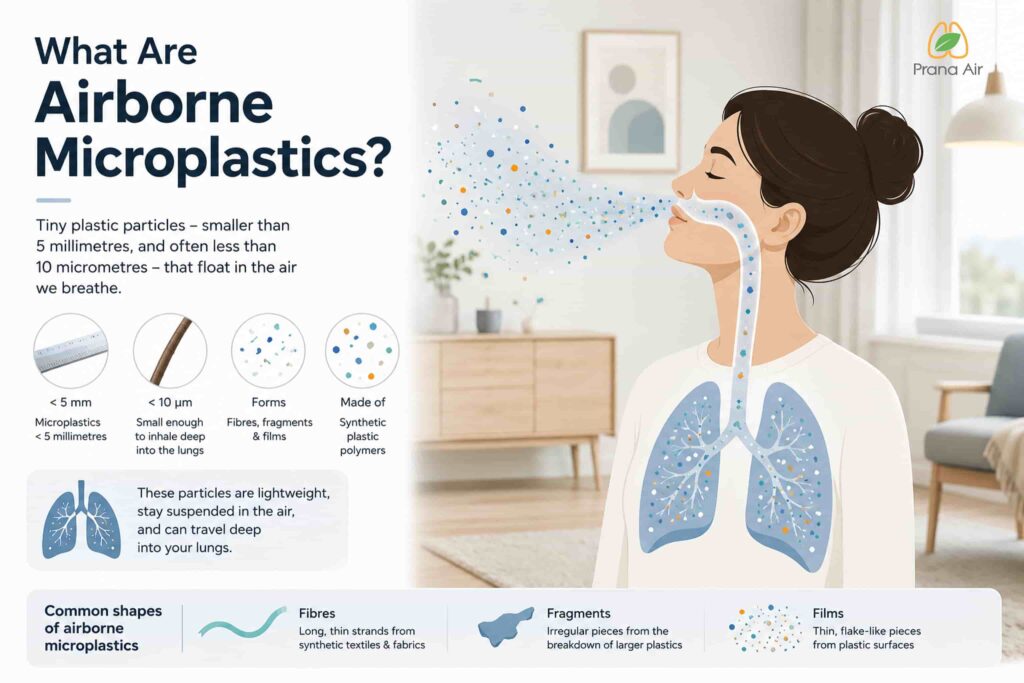
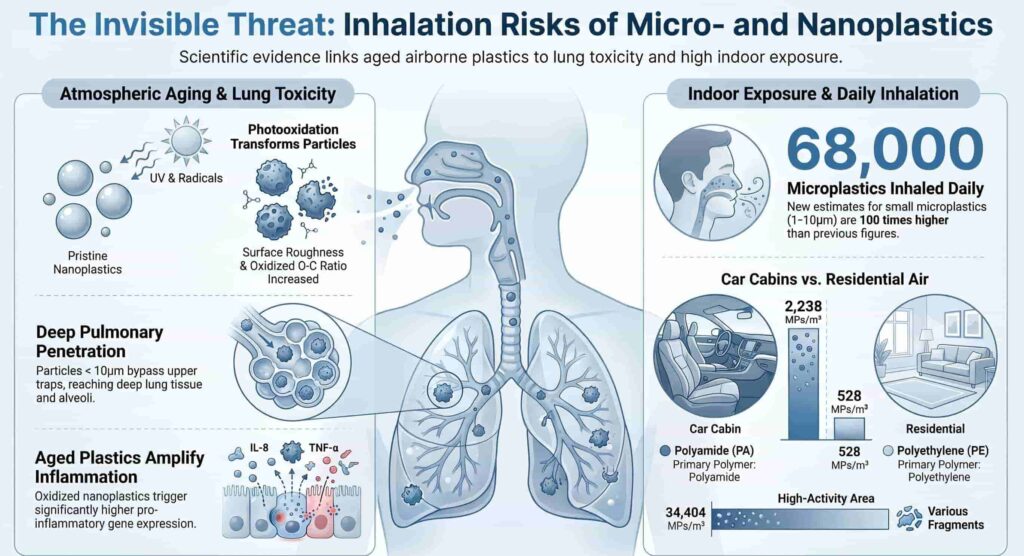
Microplastics are plastic particles smaller than 5 millimetres in diameter. The particles of greatest concern for lung health are smaller than 10 micrometres. That's roughly one-tenth the width of a human hair. According to the World Health Organization Air Quality Guidelines (2021), particles this size are classified as inhalable. They represent a significant exposure pathway. They are small enough to bypass your nose and upper airway. They travel deep into the lungs. They can potentially cross into the bloodstream.
Airborne synthetic microfibers are not a single substance. They are fragments, fibers, and thin films of many different plastic polymers. Examples include polyethylene terephthalate (PET), polyethylene (PE), polypropylene (PP), polyamide (nylon), and polystyrene. These polymers shed continuously from plastic-containing materials in enclosed spaces. Friction, heat, light, and mechanical stress cause this shedding. As they break down, they become particles small enough to float in the air we breathe. This process happens continuously in homes, offices, and vehicles with limited ventilation.
Why Indoor Microplastics Concentrate More Indoors
This problem is counterintuitive. That's why it's consistently underestimated.
Outdoors, wind and open air circulation keep airborne particles relatively diluted. Indoors, air moves far less freely. Particles released by synthetic materials in a closed room build up and remain suspended. They concentrate over time. Independent studies document this pattern repeatedly. Respiratory particle levels substantially exceed outdoor levels.
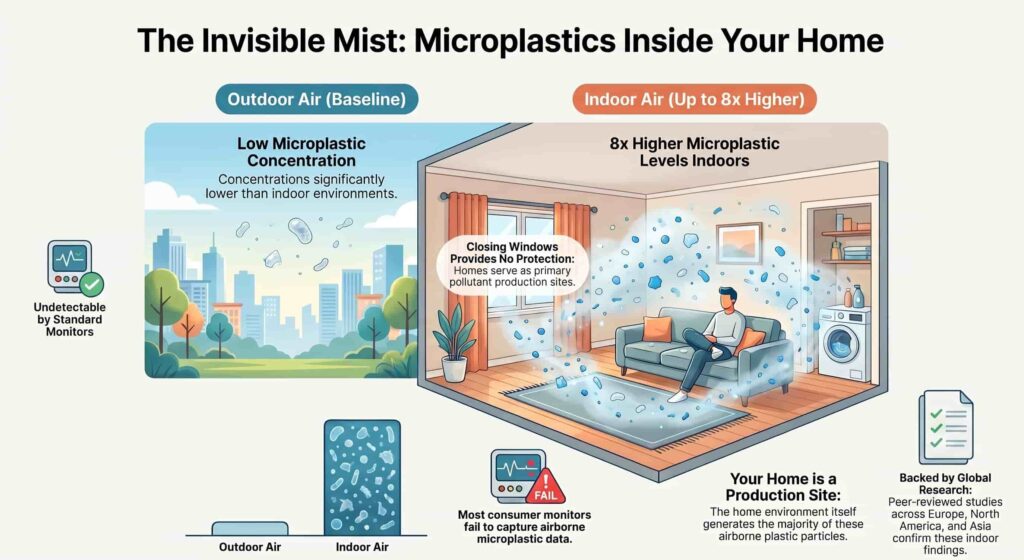
European Research Findings. Dris et al. published a peer-reviewed 2017 study in Environmental Pollution. They measured synthetic microfibers in two apartments, an office, and an outdoor rooftop in Paris. Indoor levels ranged from 0.4 to 59.4 fibers per cubic metre. Outdoor levels were just 0.3 to 1.5 fibers per cubic metre. At its upper range, that's an eightfold difference. A 2025 study in PLOS One sampled air in apartments and vehicles in Toulouse, France. Adults may inhale approximately 68,000 microplastic particles per day from indoor air alone. These particles measure 1 to 10 micrometres. The study's authors noted this was roughly 100 times higher than prior estimates.
A 2024 review in Microplastics stated directly that indoor microplastics levels are higher indoors than outdoors. Fibers from synthetic textiles account for the dominant share of indoor particles. The same review concluded that inhaled airborne contaminants represent a greater health exposure pathway than ingestion through food and drink. This is significant given how much public attention has focused on microplastics in bottled water and food packaging.
Time Exposure Factor. Klepeis et al. analysed 9,386 individuals through the US National Human Activity Pattern Survey. They found that people spend an average of 87 percent of their time indoors. A further 6 percent is spent inside enclosed vehicles. The U.S. Environmental Protection Agency (EPA) and World Health Organization (WHO) cite comparable figures globally. For a pollutant like indoor microplastics that concentrates indoors, this time distribution matters significantly.
What Inside Your Home Releases Microplastics?
The sources are not industrial or exotic. They are the materials that make up a modern living environment.
Synthetic clothing and bedding. Every time you wear, wash, or move in polyester, nylon, acrylic, or polypropylene garments, tiny fibers detach. They become airborne. A 2025 school environment study in ScienceDirect found that textiles and synthetic packaging were the two dominant sources of indoor microplastics. Polyester and acrylates accounted for 33 and 31 percent of airborne synthetic particles respectively. Bedding, blankets, and pillowcases made from synthetic materials shed particles during every night of use.
Carpets and rugs. Synthetic-fiber carpeting acts as both a continuous emission source and a reservoir. Fibers shed passively into the air. Particles that settle into pile are re-released every time someone walks across the floor. A fan running or a vacuum displaces surface dust. It releases additional airborne contaminants.
Upholstered furniture. Sofas, cushions, and padded chairs upholstered with microfiber or polyester blends release particles. This happens during the compression and flexing of ordinary use. Research on air conditioner dust found PET comprising 38 percent of airborne synthetic particles trapped in AC filters. Nylon contributed a further 18 percent.
Vinyl flooring, wallpapers, and painted surfaces. Plastic-based floor coverings and certain wall coatings break down slowly. They release fragments into household dust. Foot traffic and air movement make this dust airborne.
Vehicle interiors. Vehicle interiors represent one of the most concentrated indoor microplastics environments documented by research. A PLOS One study published in July 2025 recorded microplastic levels of up to 2,238 particles per cubic metre inside car cabins. 94 percent of those particles were smaller than 10 micrometres. Synthetic seat covers, dashboard plastics, carpet lining, and headliner fabrics all contribute. This buildup happens in a small, typically under-ventilated space.
The key mechanism in all of these cases is the same. Enclosed space with limited fresh air exchange combines with constant mechanical shedding from surrounding synthetic materials. This creates a concentration dynamic that outdoor environments never produce.
What Global Research Is Finding
Scientific institutions across multiple continents have published data on indoor microplastics in enclosed environments. The findings are consistent in their direction.
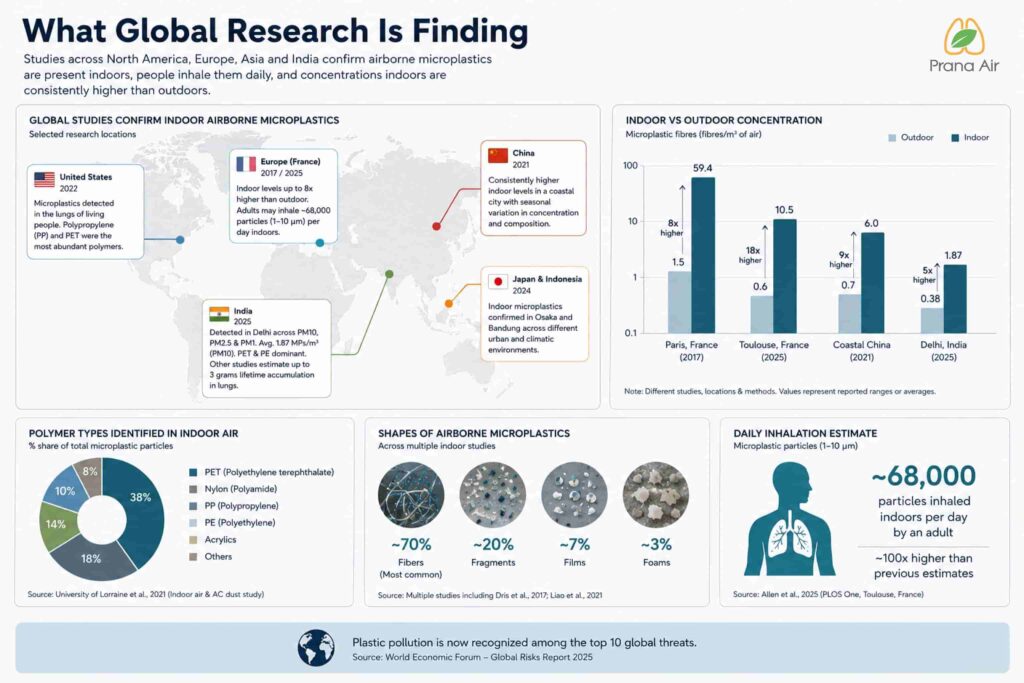
United States. A 2022 study in Science of the Total Environment was among the first to document microplastics in living people's lungs. Not cadavers, but living individuals. Researchers identified polypropylene and PET as the most abundant polymer types. Microplastics had previously been detected in post-mortem tissue. Their presence in living lung tissue confirmed inhalation as an active, ongoing exposure route.
Europe. The Paris and Toulouse studies established both the indoor/outdoor level difference and daily inhalation figures. Research from the University of Lorraine characterized indoor microplastics by polymer type and morphology. Fibrous particles were the dominant form. This is the most harmful shape for respiratory deposition.
China. Liao et al. published a study in the Journal of Hazardous Materials in 2021. They characterized airborne synthetic particles in a coastal city in eastern China. They found consistent indoor elevation. They documented seasonal variation in particle level and composition.
Japan and Indonesia. A 2024 conference study in E3S Web of Conferences compared airborne synthetic particles in Bandung and Osaka. It extended the geographic documentation of indoor microplastics prevalence. It covered different urban and climatic environments.
India. A study published in Scientific Reports in July 2025 by researchers from the Indian Institute of Tropical Meteorology, Pune, conducted the first systematic characterization of indoor microplastics in Delhi. They sampled across winter and summer. Sampling at Lodhi Road across PM10, PM2.5, and PM1 fractions recorded average levels of 1.87 microplastics per cubic metre for PM10. PET and polyethylene were dominant polymers. Notable seasonal variation was observed. A parallel study by researchers at IISER Kolkata and IMSc Chennai, published in Environmental International (2025), documented inhalable microplastics in major Indian city markets. Sampling was at human breathing height. The study estimated a potential lifetime lung buildup of up to three grams per person.
The World Economic Forum's Global Risks Report 2025 listed pollution among the top ten global threats. This includes plastic pollution. This reflects how quickly the issue of indoor microplastics has shifted from academic concern to mainstream risk assessment.
What Happens When Microplastics Enter the Body
Research published over 2024 and 2025 has sharpened the picture of what happens after microplastics are inhaled or ingested. The findings warrant careful attention.
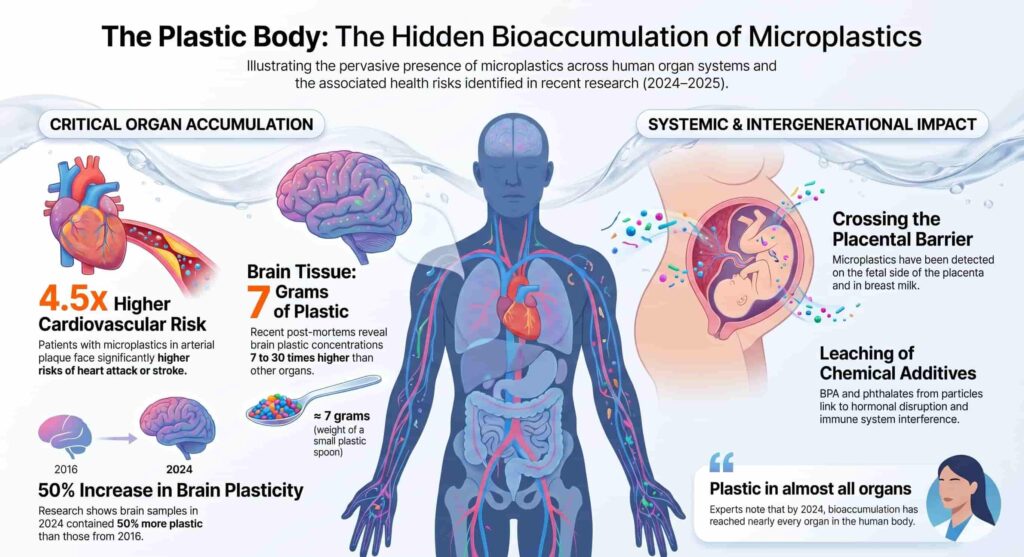
The lungs. Particles smaller than 10 micrometres can settle in the lower airways. The smallest particles, nanoplastics below one micrometre, can cross the alveolar membrane. They enter the bloodstream. Chronic exposure to microplastic-laden air has been linked with respiratory inflammation. It causes oxidative stress in multiple peer-reviewed studies.
The cardiovascular system. A landmark 2024 study in the New England Journal of Medicine examined patients with carotid artery plaque. Those with microplastics embedded in their arterial tissue faced a 4.5 times higher risk. The risk was for heart attack, stroke, or death. This compared to those without detectable microplastics over a three-year follow-up period.
The brain. Perhaps the most significant recent finding comes from a study in Nature Medicine in February 2025. Researchers at the University of New Mexico analysed post-mortem tissue samples. They examined kidney, liver, and brain tissue. They compared samples from 2016 and 2024. Brain tissue held microplastic levels seven to thirty times higher than liver or kidney tissue. Brain samples from 2024 contained approximately 50 percent more plastic than samples from 2016. This suggests that global buildup of plastic in human brain tissue is measurably increasing. This happened over just eight years. The total estimated plastic weight in brain tissue was approximately seven grams. That's roughly equivalent to a small plastic spoon.
Hormonal and immune systems. Many plastic polymers contain chemical additives such as phthalates, bisphenol A (BPA), and flame retardants. These do not remain bound to the particle. Research summarized in a 2025 Frontiers in Environmental Science review found evidence linking microplastic exposure to hormonal disruption. It causes immune system interference. Early-stage studies suggest potential effects on reproductive health and fetal development.
Placenta and breast milk. The exposure pathway does not begin at birth. Ragusa et al. published a study in Environment International in 2021. They detected microplastic fragments on the fetal side of the human placenta. This was in four of six samples using Raman Microspectroscopy. This was the first study to confirm that plastic particles cross the placental barrier. They reach the developing fetus. The same research group subsequently confirmed microplastics in human breast milk (Polymers, 2022). Saraluck et al. independently replicated this finding (Journal of Clinical Medicine, 2024). They also identified statistically significant associations between microplastic presence in breast milk and breastfeeding complications. These include mastitis. The World Health Organization's 2022 assessment acknowledged these intergenerational exposure pathways. It identified them as an area requiring urgent further investigation.
Emerging links. A 2025 study in Science Advances found that microplastics in the bloodstream could block brain blood vessels. This was in mouse models. It raises early-stage concern about neurological effects. Fabienne Lagarde, a French specialist researcher, stated in a 2024 parliamentary hearing that "a human in 2024 has plastic in almost all the organs of their body." This reflects the current state of bioaccumulation evidence.
Researchers consistently note that establishing direct causation in human populations requires further longitudinal work. What is not disputed is the consistent presence of microplastics across human organs. The clear correlation between elevated body burden and adverse health outcomes in cardiovascular research is also not disputed.
The Regulatory Gap
Despite accumulating evidence, most countries have yet to regulate indoor microplastics as a distinct pollutant category. Standard air quality frameworks remain focused on PM2.5, PM10, and specific gases. These are established by the United States (EPA), Europe (EU Air Quality Directive), and India (CPCB/NAAQS). Synthetic microfibers constitute a measurable fraction of the PM2.5 and PM10 counts already being monitored. Yet they remain unclassified and untracked.
In August 2024, India's National Green Tribunal directed the Central Pollution Control Board to evaluate including microplastics in national ambient air standards. France enacted a requirement in 2025 that all new washing machines include microfiber-capturing filters. At the international level, 175 countries agreed at the 2022 UN Environment Assembly to negotiate a legally binding global treaty on plastic pollution. As of 2026, that treaty process continues.
The regulatory lag means that consumers and businesses currently have no official guidance. There is no standard for what constitutes a safe or unsafe indoor microplastics level. There is no standard monitoring framework to track it.
What You Can Do Now
There is no method of eliminating indoor microplastics from air entirely. The materials that produce them are embedded in modern homes, clothing, and transport. But several evidence-backed steps can meaningfully reduce your exposure to airborne synthetic particles.
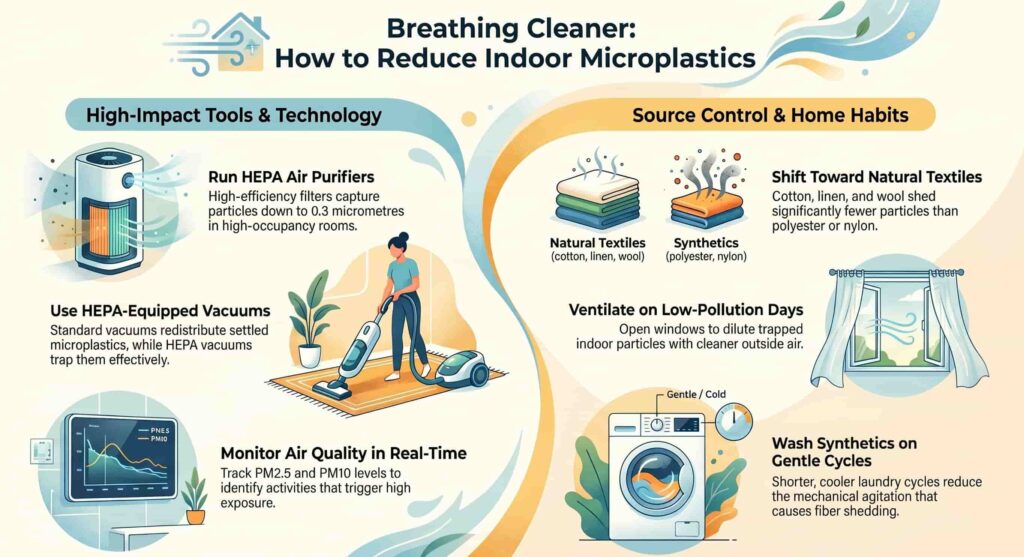
- Run a HEPA air purifier in high-occupancy rooms. High-efficiency particulate air filters capture particles down to 0.3 micrometres. This covers the entire range of inhalable synthetic microfibers. Bedrooms and living rooms offer the highest return on investment for exposure reduction.
- Increase ventilation and fresh air exchange. Open windows when outdoor air quality permits. Use mechanical ventilation systems. Fresh air dilutes indoor microplastics levels. It prevents buildup in enclosed spaces.
- Choose natural-fiber clothing and furnishings. Cotton, wool, linen, and silk shed far fewer synthetic particles than polyester, acrylic, and nylon blends. Prioritize natural materials for bedding, upholstery, and frequently-worn garments.
- Vacuum with HEPA filtration. Standard vacuum cleaners recirculate fine particles. HEPA-equipped vacuums capture synthetic microfibers from carpets and rugs. They prevent them from being released back into the air.
- Wash synthetic clothing in cold water. Hot water increases fiber shedding. Cold water washing reduces the number of microfibers released during the wash cycle.
- Use microfiber-catching laundry filters. Specialized filters installed on washing machines capture synthetic fibers. They prevent them from entering wastewater and the environment.
- Reduce synthetic material use in vehicles. When replacing car seat covers or interior trim, choose natural materials. This reduces the primary source of microplastics in vehicle cabins.
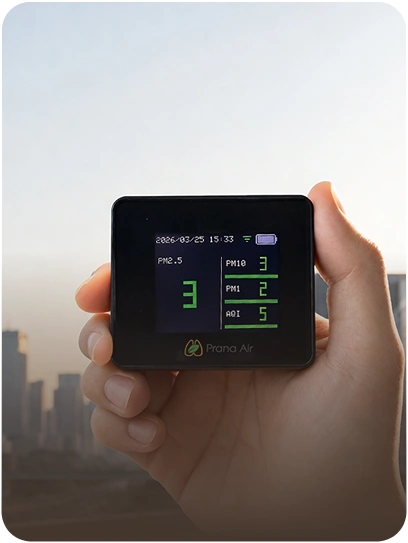
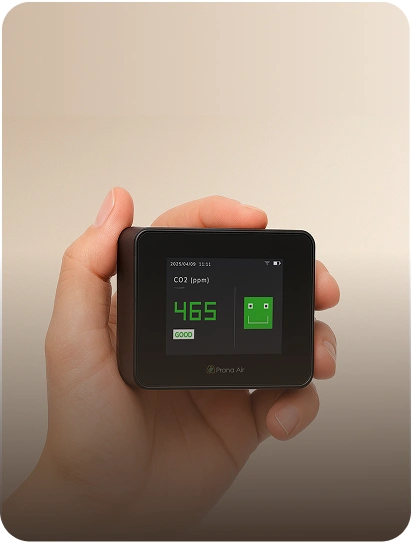
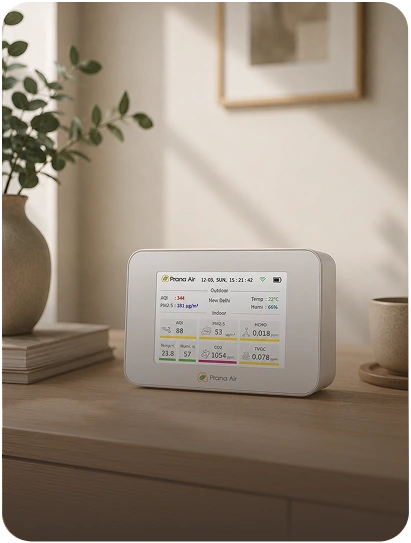
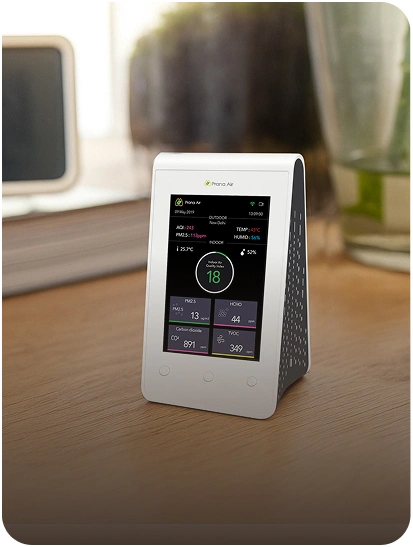
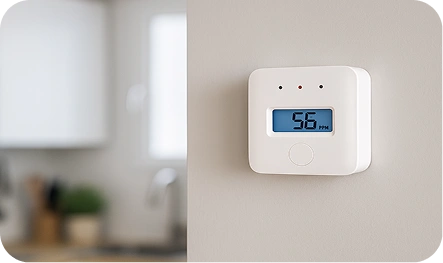
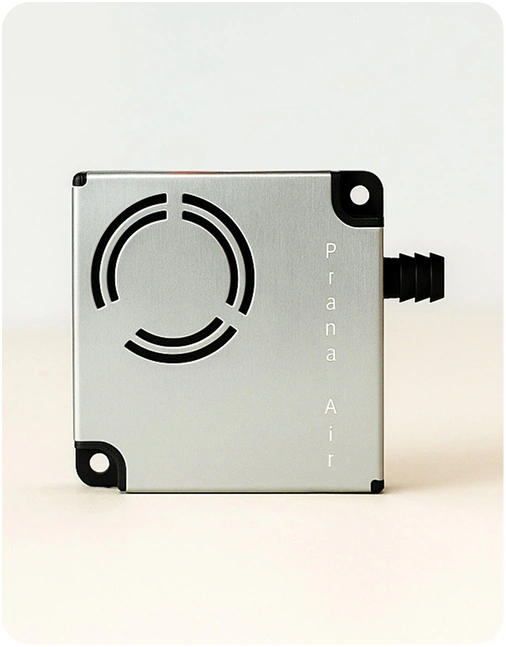
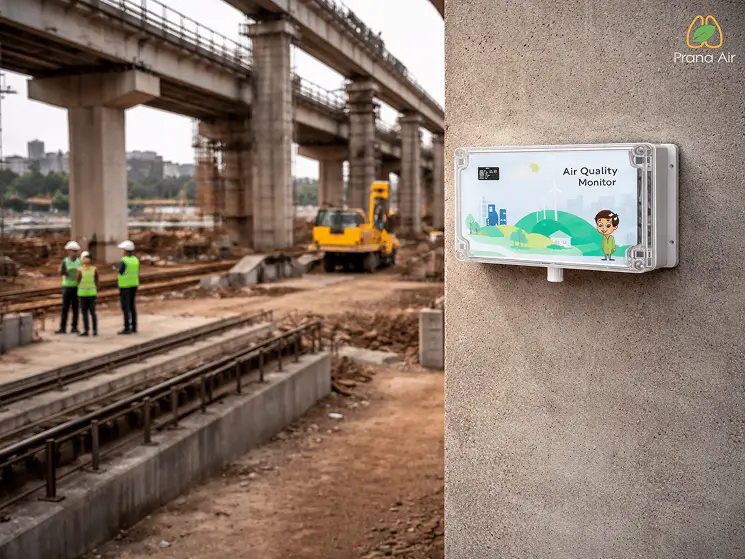
- Monitor indoor air quality. Air quality monitors that detect particulate matter help you track exposure. They show whether your reduction efforts are working.
Final Thought
The discovery of indoor microplastics at levels eight times higher than outdoor air is not a reason for panic. It is a reason for informed action. The science is clear. The exposure is real. The pathways into the body are documented. The health effects are emerging.
What is also clear is that you are not powerless. You can measure your indoor air. You can reduce the sources. You can filter the air you breathe. You can make material choices that lower your family's exposure. These steps matter. They compound over time. They reduce your lifetime body burden of synthetic particles.
The regulatory framework will eventually catch up. Standards will be set. Monitoring will become routine. But that process takes years. In the meantime, the evidence supports taking action now. Your respiratory health, cardiovascular health, and long-term wellness depend on the air you breathe indoors. Make it count.

 Let’s Talk