 Shakshi
You step into a parking garage. It’s dim, quiet, and slightly humid. The air carries that all-too-familiar scent of engine fumes—so subtle, most of us stop noticing it. Maybe you’re just parking your car. Maybe you work there. You assume a few minutes won’t matter. But here’s the catch in the parking lot air quality: in those few minutes, you may inhale a mix of carbon monoxide (CO), nitrogen dioxide (NO₂), volatile organic compounds (VOCs), and fine particulate matter (PM2.5)—pollutants known to cause everything from headaches to long-term lung damage.
Now, imagine this exposure happening every day. For security guards, valets, maintenance staff, or frequent drivers, that’s exactly the case. And even if you’re just passing through, short bursts of high exposure in enclosed spaces can still affect your health—especially if you’re old-age, asthmatic, or pregnant.
We often obsess over outdoor air pollution—and rightly so. But ironically, some of the most hazardous air is found in places designed for everyday convenience. Indoor parking lots remain one of the most overlooked toxic zones in urban infrastructure, largely because they’re not regulated or monitored as strictly as other indoor environments.
Fortunately, that gap is closing. With modern sensor-based technology, we can now monitor, manage, and drastically improve parking lot air quality in real time. And Prana Air is leading that shift—offering precision-driven air quality monitoring systems that make invisible pollution visible, and controllable.
The Problem: Parking Lots as Concentrated Pollution Zones
Unlike open-air environments, underground or enclosed parking lots trap emissions. Here’s why they’re particularly hazardous:
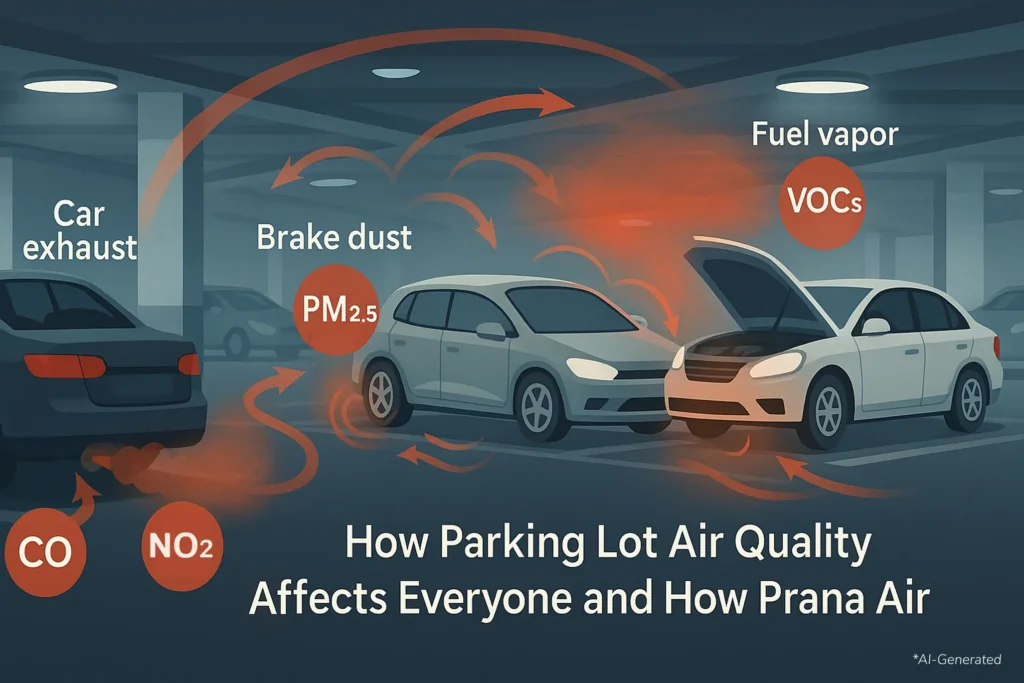
- High vehicular activity in confined space = constant pollutant input
- Poor or inconsistent ventilation = pollutant accumulation
- Minimal regulation or monitoring = no accountability
Key Pollutants Typically Found in Parking Lots:
| Pollutant | Health Risk | Primary Source |
| Carbon Monoxide (CO) | Headaches, reduced oxygen to brain, death in extreme cases | Incomplete fuel combustion |
| Nitrogen Dioxide (NO₂) | Lung irritation, asthma triggers | Diesel engines |
| Particulate Matter (PM2.5, PM10) | Deep lung penetration, cardiovascular stress | Engine wear, dust, tire particles |
| Volatile Organic Compounds (VOCs) | Cancer risk, liver/kidney damage | Fuel vapors, solvents, exhaust |
What the Data Says: How Bad Is It?
Multiple air quality studies in commercial parking facilities across major cities reveal alarming numbers:
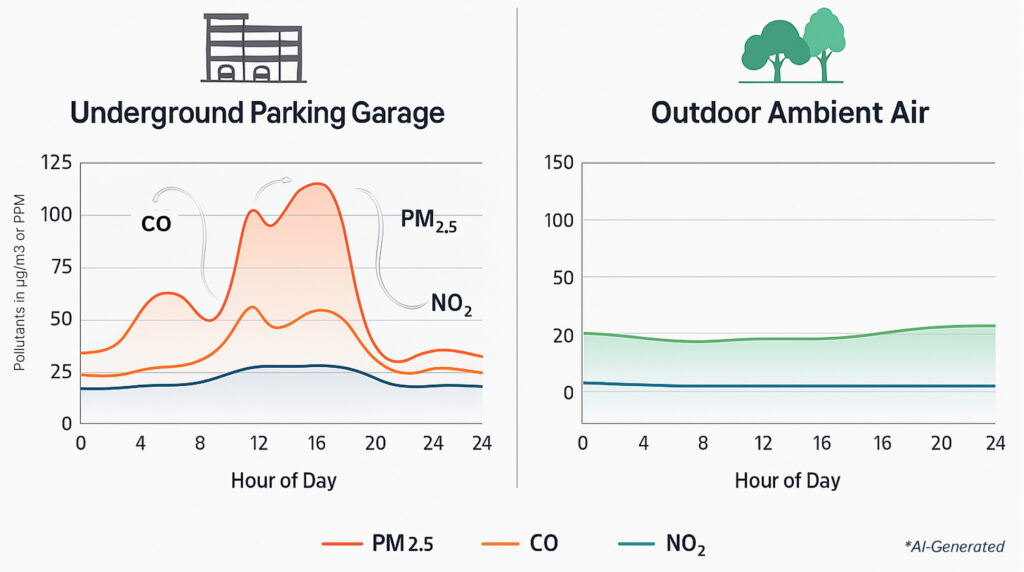
- CO (Carbon Monoxide) levels in underground lots often exceed 25–35 ppm, well above the safe limit for extended exposure (9 ppm long-term per EPA).
- PM2.5 concentrations in enclosed garages are 3 to 5 times higher than nearby outdoor areas.
- In a 2022 Delhi-based study, underground lots had PM2.5 levels peaking at 300+ µg/m³, compared to outdoor averages of 80–100 µg/m³.
- Parking lot workers show a 30–40% higher risk of respiratory symptoms, including chronic bronchitis, asthma, and reduced lung function.
What’s worse is that most of these spaces have no air quality sensors—meaning building managers and employers remain unaware of the danger.
Why Ventilation Alone Is Not Enough
Many assume that mechanical ventilation is a sufficient safeguard. But conventional systems typically operate on static schedules, not real-time conditions. Because, this approach has two major flaws:
- Inefficiency: Ventilation runs when it’s not needed, wasting energy.
- Ineffectiveness: Pollutants accumulate during high-traffic periods but are not detected or addressed in real time.
Without actual measurements, there’s no control—only guesswork. That’s why air quality monitoring is the foundation of intelligent environmental management in parking lots.
The Solution: Real-Time Parking Lot Air Quality Monitoring by Prana Air
Prana Air provides a scientific, sensor-based solution to monitor and manage indoor air pollution in parking environments.
What Does the System Measure?
- Particulate Matter: PM1, PM2.5, PM10
- Gaseous Pollutants: CO, NO₂, SO₂, O₃
- TVOCs: Total Volatile Organic Compounds
- Environmental Parameters: Temperature, Humidity, Barometric Pressure
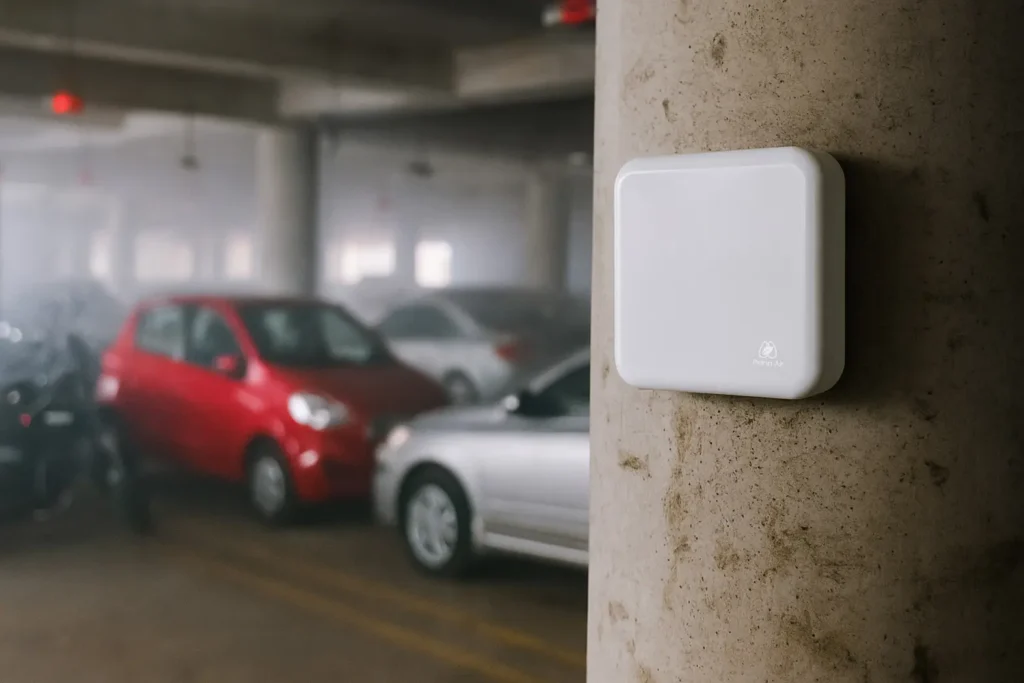
Key Technical Features:
- High-accuracy laser and electrochemical sensors
- Real-time data transmission over Wi-Fi, GSM, or RS-485
- Cloud dashboard for visualizing historical trends, alerts, and sensor diagnostics
- System integration with HVAC and ventilation to automate clean-air responses
Why It Matters To Monitor Air Quality in Parking Lots?
| Feature | Benefit |
| Real-time Monitoring | Detect and respond to pollution spikes immediately |
| Data-Driven Ventilation | Activate systems only when needed — reduce energy waste |
| Historical Data Logging | Regulatory compliance, auditing, and analysis |
| Multiple Sensor Integration | Holistic view of air quality in large facilities |
Who Needs Parking Lot Air Quality Monitoring and Why?
1. Facility Managers
- Get actionable insights to optimize ventilation and maintenance.
- Prevent complaints and legal liability from poor indoor air quality.
2. Employers and Property Owners
- Protect the well-being of parking staff, security personnel, and maintenance crews.
- Enhance brand reputation by prioritizing safety and sustainability.
3. Urban Planners and Developers
- Future-proof properties as indoor air quality norms tighten.
- Use monitoring data to guide infrastructure planning and design improvements.
4. General Public and Drivers
- Even short exposures matter. Safe air quality protects vulnerable groups like the old age, children, and expecting mother.
Real-World Impact: Who Benefits with Parking Lot Air Quality Monitoring?
- Building Managers: Meet IAQ standards, reduce energy costs, prevent liability
- Business Owners: Lower insurance risks, improve staff satisfaction
- Municipal Authorities: Use data for public health assessments
- Everyday Commuters: Safer breathing spaces without even knowing it
Beyond Technology: Prana Air’s Vision for Urban Health
Prana Air’s system is not just a gadget—it’s part of a broader ecosystem to make Indian infrastructure safer and smarter. As cities densify, multi-level parking will only grow. The absence of air quality monitoring in these zones is no longer acceptable.
By providing affordable, scalable, and scientifically validated systems, Prana Air is enabling a future where indoor transit spaces are just as protected as our homes and offices.
Conclusion: What Gets Measured Gets Managed
Parking lots may be transitional spaces, but their impact on health is lasting. For too long, they’ve been excluded from conversations around indoor air safety. That needs to change.
If you manage a facility, develop real estate, or care about public health, investing in air quality monitoring is no longer optional—it’s essential.With Prana Air, you get more than a sensor. You get a data-driven ecosystem that transforms unseen threats into manageable variables.

 Gyane Haobijam