 Shakshi
When was the last time you saw the Milky Way or stars in the sky? If you’re living in an Indian metro city, chances are it’s been years—or maybe you’ve never seen it at all. This isn’t just about missing out on stargazing. It’s about something far more serious: light pollution in India show that over 50% of India’s population is exposed to light-polluted skies every single night. Cities like Delhi and Bengaluru are experiencing nighttime brightness levels 40–50 times higher than what’s considered natural. This excessive, artificial light—especially from LED streetlights, billboards, and even our smartphones—is interfering with our sleep cycles, hormones, metabolism, and mental health.
In fact, scientists warn that this modern form of pollution may soon become as dangerous as air and noise pollution, yet it’s still unregulated in India. So what does this mean for your health, and how can you protect yourself? Thus let us know what light pollution is and how it’s increasing in India, The science of lux (light intensity) and how it affects your sleep and hormones and how Prana Air’s Lux Monitor helps you track and reduce exposure in real time.
What Is Light Pollution?
Light pollution refers to excessive or misdirected artificial light that disturbs natural darkness. It’s caused by streetlights, advertising boards, homes, industries, and increasingly by energy-efficient LEDs, which emit harmful blue light that suppresses melatonin production—a key hormone for sleep.
Common Types of Light Pollution:
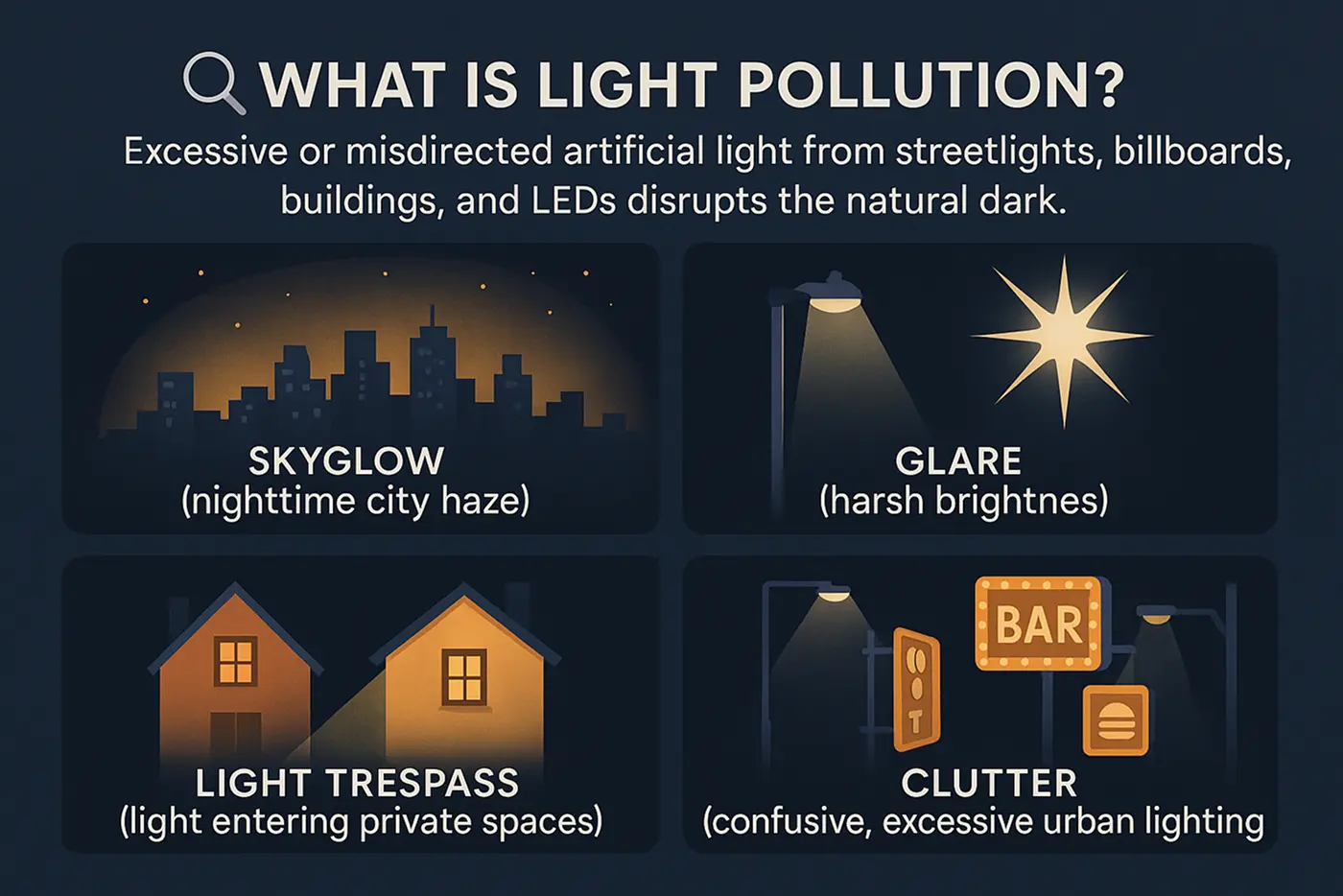
- Skyglow: The orange/white haze over cities at night.
- Glare: Blinding light from lamps or headlights.
- Light Trespass: Unwanted light entering homes or bedrooms.
- Clutter: Bright, confusing light arrangements in urban areas.
India’s Light Pollution Problem: What the Data Says
India is among the fastest urbanizing countries—and light pollution is rising rapidly as a result.
- A 2019 Urban Climate study found a steady increase in light emissions across India between 1999 and 2019.
- Cities like Delhi, Mumbai, Bengaluru, Kolkata, and Hyderabad have transitioned from moderate to very high light pollution levels.
- According to Science Advances (2016), artificial brightness in central Bengaluru is 41 times higher than natural light levels.
- LED expansion is a major cause: Delhi alone has deployed 1 crore smart LED lights.
| City/State | 1999 Status | 2019 Status | Drivers |
| West Bengal | Low | High | Industrial growth, LED lighting |
| Gujarat | Low | High | Billboards, urban lighting |
| Tamil Nadu | Low | High | LED streetlight rollout |
| Bengaluru | Moderate | Very High | Tech campuses, 24×7 lighting |
| Delhi | Moderate | Very High | Smart cities project, dense lighting |
Understanding Lux: The Light You Can Measure
Lux is the unit of measurement for light intensity—lumens per square meter. High lux levels, especially at night, disrupt our body’s natural processes.
Lux Level Classification and What It Means
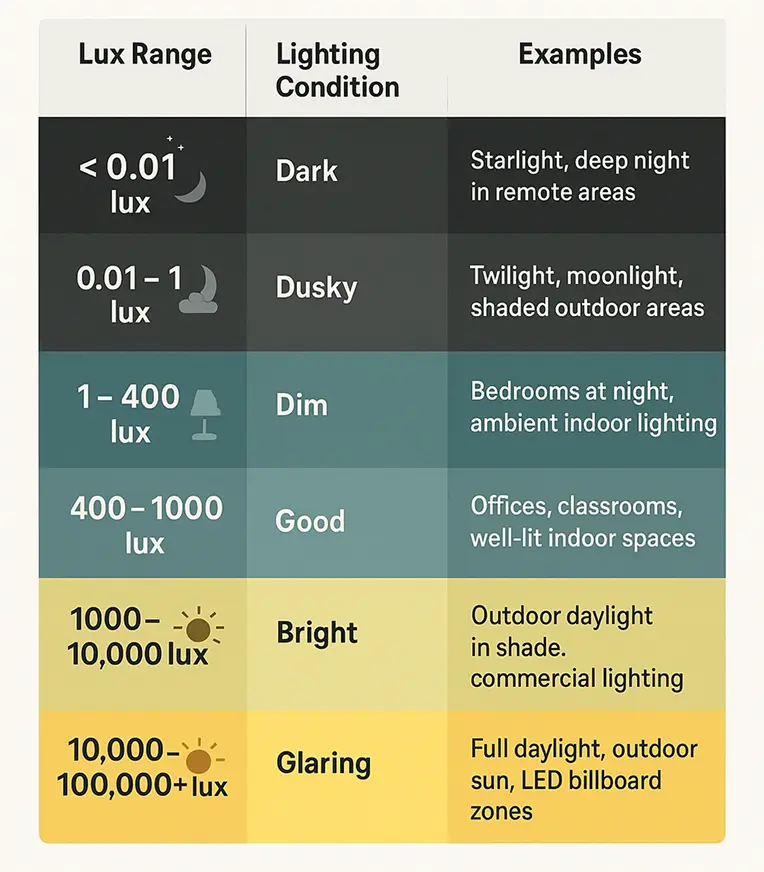
| Lux Range | Lighting Condition | Examples |
| < 0.01 lux | Dark | Starlight, deep night in remote areas |
| 0.01 – 1 lux | Dusky | Twilight, moonlight, shaded outdoor areas |
| 1 – 400 lux | Dim | Bedrooms at night, ambient indoor lighting |
| 400 – 1000 lux | Good | Offices, classrooms, well-lit indoor spaces |
| 1000 – 10,000 lux | Bright | Outdoor daylight in shade, commercial lighting |
| 10,000 – 100,000+ lux | Glaring | Full daylight, outdoor sun, LED billboard zones |
How Light Pollution Affects Human Health in India?
1. Sleep Disruption
Light pollution, particularly from blue light, reduces melatonin, affecting the circadian rhythm. This causes poor sleep quality, fatigue, and insomnia. A 2022 AIIMS Delhi study found 40% higher rates of sleep disorders in urban residents exposed to >300 lux after 9 PM.
2. Mental Health Disorders
Chronic exposure to artificial light at night (ALAN) is linked to anxiety, depression, and mood disturbances. A 2020 JAMA Psychiatry study showed adolescents exposed to ALAN had higher mental disorder risks.
3. Cancer and Hormonal Risks
Reduced melatonin weakens DNA repair and boosts cell growth, increasing the risk of breast and prostate cancer. A 2021 Sleep and Vigilance study highlighted melatonin’s role in cancer prevention via its antioxidant and immune-regulatory actions.
4. Metabolic and Fertility Problems
Sleep deprivation leads to type-2 diabetes, obesity, and reproductive issues, especially among night shift workers. The Indian Express (2021) reported decreased egg viability in women and hormonal imbalance in men due to blue light from devices.
No Laws, No Limits: India’s Regulatory Gap
- As of June 2025, India still lacks a statutory framework to regulate light pollution, as acknowledged by the Central Pollution Control Board (CPCB).
- The Panchtatva Foundation filed a petition in 2024 citing health concerns—but formal policy remains pending.
- This contrasts with countries like the U.S., which enforces dark-sky ordinances, and Europe, where environmental zoning helps control outdoor lighting.
Why Real-Time Lux Monitoring Matters
To protect health, sleep, and productivity, it’s vital to measure and control your light exposure—especially in homes, schools, hospitals, and commercial zones. This is where Prana Air steps in.
Introducing Prana Air’s Air Quality Monitor that Also Monitor LUX:
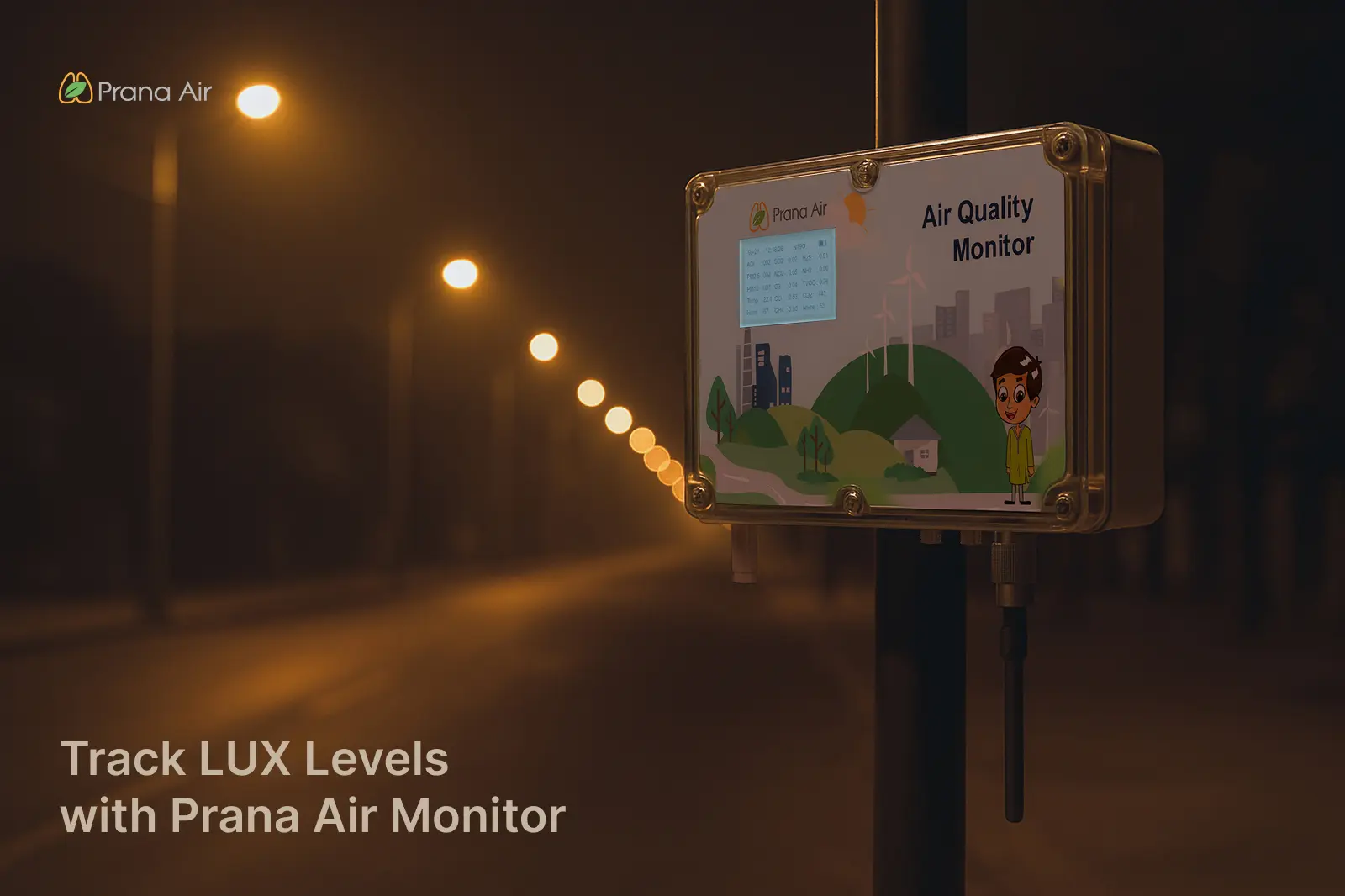
Prana Air’s Ambient Monitor is designed to track real-time light intensity (lux levels) across a wide range.
Key Features:
- Monitors with high accuracy
- Real-time data logging and alerts
- Smart integration with lighting systems
- Suitable for urban homes, hospitals, offices, schools, construction sites
By understanding the light intensity around you, you can create light-hygienic spaces that support better sleep, focus, and long-term health.
Simple Steps to Reduce Light Pollution at Home & Office
- Switch to warm LED lights (under 2700K)
- Use motion sensors and dimmers for outdoor lights
- Block unwanted light using curtains or films
- Avoid bright screens at least 1 hour before bedtime
- Track and adjust exposure using Prana Air’s Lux Monitor
Conclusion: It’s Time to Take Control of Your Light
Light pollution is a silent but serious public health issue in India. From sleep loss to cancer risks, its impact spans far and wide—yet remains largely unregulated. With data-backed insights and real-time lux monitoring, you can protect your health, home, and future.