 Shakshi
As climate change intensifies and urban air pollution becomes a public health crisis, the tools we use to understand and monitor the environment are more important than ever. In India, where over 90% of the population breathes air exceeding WHO safe limits, understanding both weather conditions and air quality is no longer optional — it’s essential. Enter two powerful tools: the weather station vs the air quality monitor. Many people mistakenly think these devices do the same thing. In reality, they measure completely different sets of data, and using both offers a comprehensive view of environmental health.
In this article, we’ll break down the difference between weather station and AQI monitor, compare their components, explore their applications, and explain why using both together delivers the best results for homes, businesses, schools, and smart cities.
What is a Weather Station?
A weather station is a device that collects atmospheric data to assess and predict weather conditions. It can be as simple as a thermometer and rain gauge or as advanced as an IoT-connected station with multiple sensors feeding real-time data to the cloud.
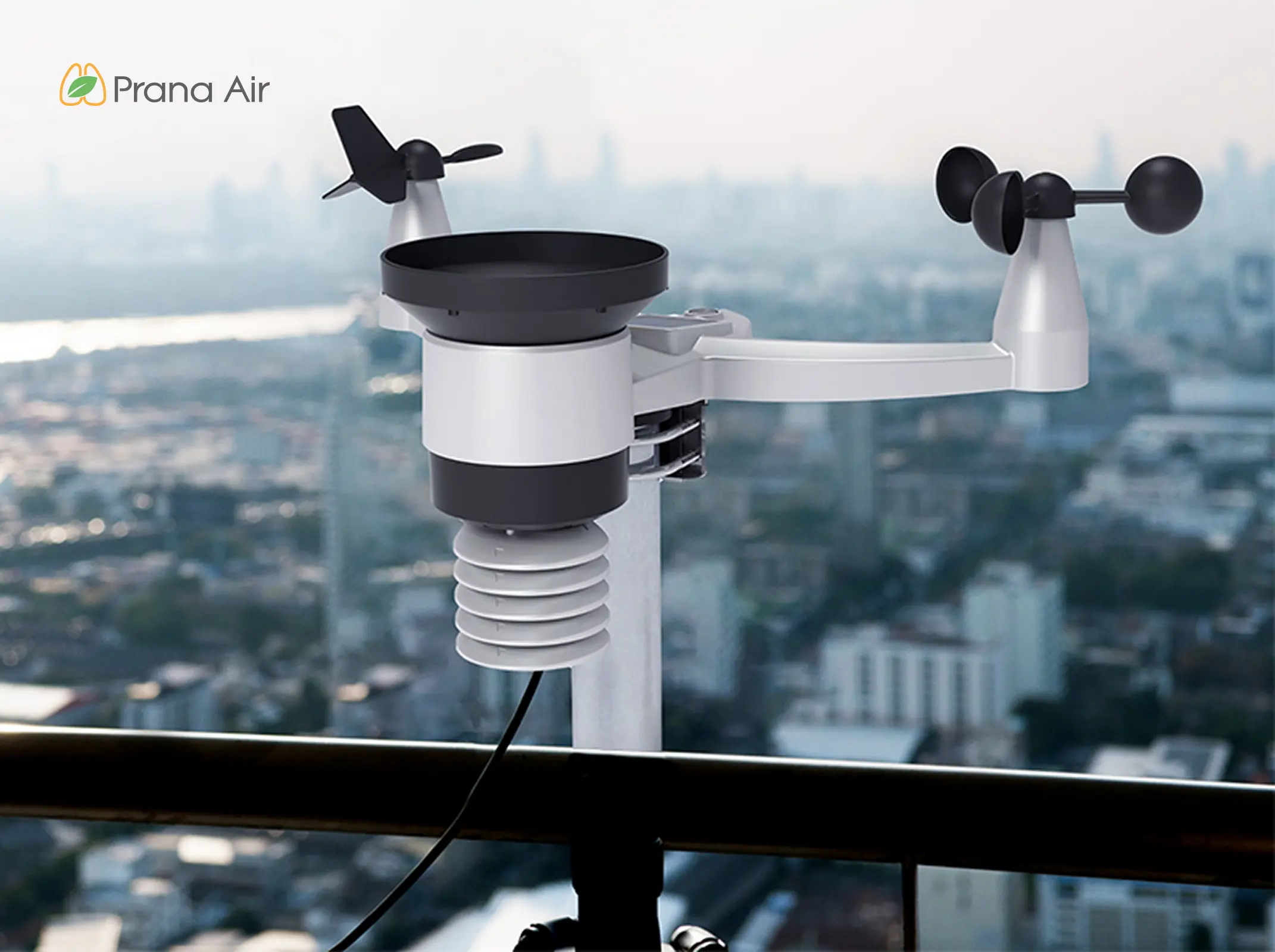
Common Sensors in a Smart Weather Station
| Parameter | Description |
| Temperature | Measures the heat level of the air using thermistors or resistance sensors |
| Humidity | Indicates moisture content in the air |
| Barometric Pressure | Measures atmospheric pressure—used to forecast storms or fair weather |
| Wind Speed & Direction | Essential for understanding wind patterns, crucial for aviation/agriculture |
| Rainfall | Tracks precipitation over time with tipping-bucket or optical sensors |
| Solar Radiation | Measures sunlight intensity; useful for solar energy planning |
Key Applications of Weather Stations
- Agriculture: Irrigation scheduling, frost warnings, microclimate monitoring
- Urban Planning: Flood prevention, climate zoning
- Aviation & Maritime: Real-time navigation data
- Disaster Management: Early warning for storms or extreme weather events
Most modern weather stations also support remote monitoring via Wi-Fi or GSM, enabling users to view data through apps and dashboards. In India, brands like Prana Air offer advanced models with solar-powered and IoT-enabled connectivity.
What is an Air Quality Monitor (AQI Monitor)?
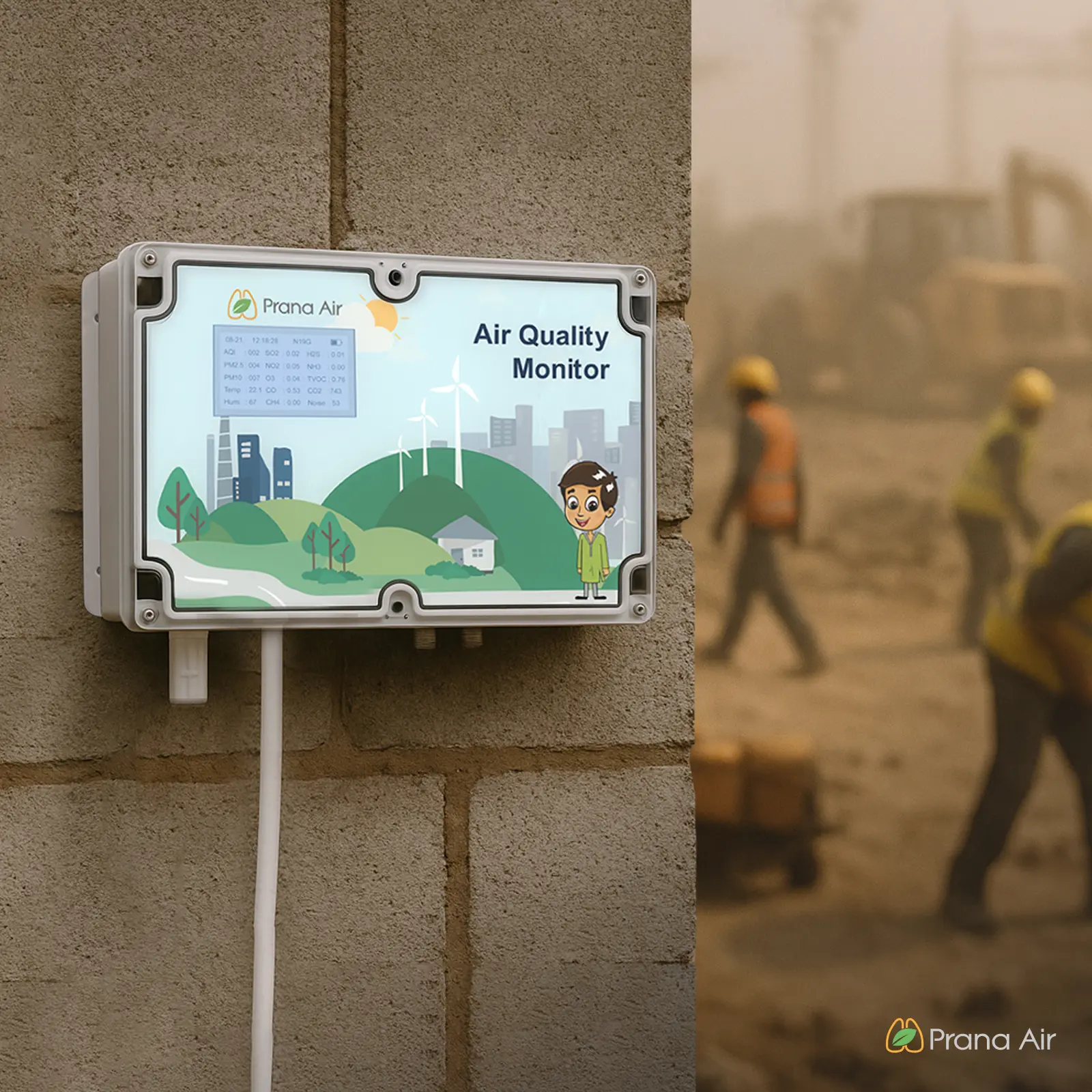
An air quality monitor is a sensor-based device designed to detect and quantify pollutants in the air, often represented through an AQI (Air Quality Index) score. While weather stations deal with climate parameters, AQI monitors focus on airborne contaminants that impact human health.
Common Pollutants Measured by AQI Monitors
| Pollutant | Measured in | Sensor Type | Health Impact |
| PM2.5 | µg/m³ | Laser scattering | Enters lungs and bloodstream; causes asthma, heart problems |
| PM10 | µg/m³ | Laser scattering | Irritates eyes, throat; triggers allergies |
| CO₂ | ppm | NDIR sensor | Impacts cognitive function and indoor air freshness |
| CO | ppm | Electrochemical | Toxic gas; exposure can be fatal |
| NO₂ | ppb | Electrochemical | Causes lung inflammation; common in vehicular exhaust |
| VOCs | ppb | Photoionization Detection (PID) | Linked to respiratory issues and some cancers |
| O₃ (Ozone) | ppb | Electrochemical | Harmful at ground level; exacerbates asthma |
Key Applications of AQI Monitors
- Home/Office Air Purity: For using purifiers and ventilation systems effectively
- Healthcare Facilities: Ensuring clean air for vulnerable patients
- Schools: Monitoring indoor and outdoor safety for children
- Smart Cities: Urban air quality mapping, traffic emission studies
- Industrial Use: Regulatory compliance, emission source identification
Brands like Prana Air are leading the way in India by offering compact, real-time AQ monitors designed for both indoor and outdoor use, compliant with CPCB and BIS standards.
Weather Station vs Air Quality Monitor: The Core Differences
Understanding the difference between weather station and AQI monitor is about understanding what they measure, how they do it, and why that data matters.
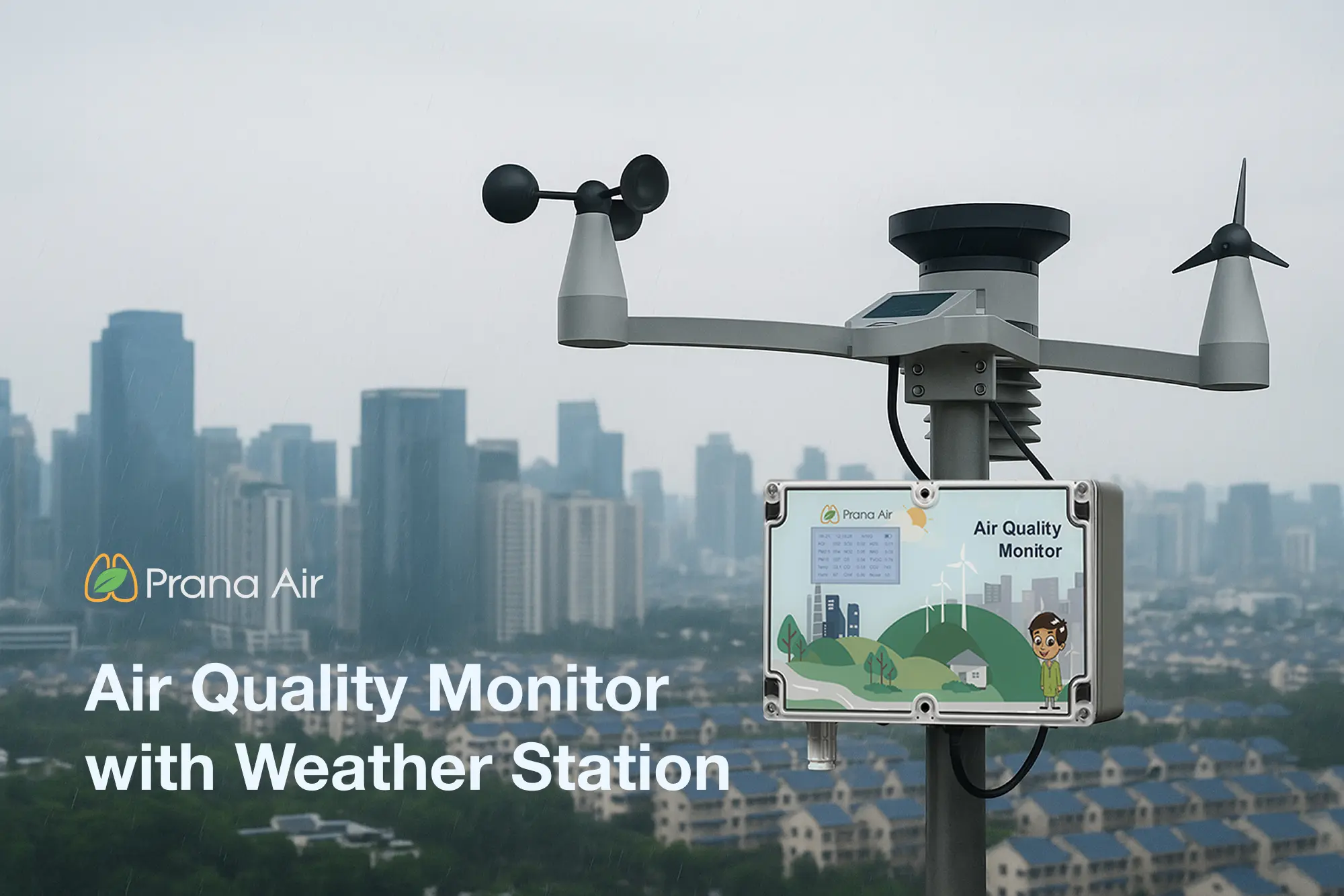
| Feature | Weather Station | Air Quality Monitor |
| Focus | Climate and atmospheric conditions | Chemical and particulate air pollutants |
| Key Sensors | Temperature, humidity, wind, rainfall | PM2.5, CO₂, VOCs, CO, NO₂ |
| Data Application | Weather forecasting, agriculture, safety | Health, ventilation, environmental health |
| Use Environments | Mostly outdoor; can be adapted indoors | Indoor and outdoor environments |
| Impact Type | Indirect health & operational impact | Direct health and wellness impact |
| Example Metric | Dew Point, Heat Index | AQI, Toxic Gas Levels |
Think of it this way: Weather stations tell you what’s happening in the sky. Air quality monitors tell you what’s entering your lungs.
Why You Should Use Both: A Powerful Environmental Duo
Using just one device only gives you part of the picture. Here’s why integrating both a weather station and an AQI monitor is a smart decision:
1. Weather Directly Influences Air Quality
- Low wind speeds cause pollutants to accumulate, especially in winter months (common in Delhi/NCR).
- Temperature inversions trap pollutants near ground level, worsening smog.
- Rain can temporarily cleanse the air, but increase mold and VOCs indoors.
- High humidity enhances the adhesion of fine particles, making them more harmful.
2. Combined Data = Smarter Alerts and Actions
- Schools can suspend outdoor activities during high PM2.5 + low wind conditions.
- Factories can ramp up filtration systems when pollutant concentrations rise under stagnant weather.
- Urban planners can deploy green barriers or traffic flow systems based on real-time pollution and wind data.
3. Compliance & Risk Reduction
Government institutions, private companies, and even residential communities are expected to comply with environmental norms. Using both types of monitoring ensures compliance with CPCB regulations, supports green certifications, and provides defensible data in case of liability issues.
Real-World Example: Delhi Winter Pollution
In Delhi winters, a typical morning might show:
- PM2.5 levels above 350 µg/m³ (Hazardous)
- The temperature near 10°C
- Wind speed less than 1 m/s
- Humidity around 75%
A weather station alone may warn of poor visibility and fog. But it’s the AQI monitor that reveals the real health hazard: dangerously polluted air that can reduce lung function within hours of exposure. Only by using both can city officials or schools make data-backed decisions.
Integrated Solutions by Prana Air
Prana Air offers advanced smart weather monitoring devices and high-accuracy AQI monitors, both available with real-time dashboards, app control, and cloud storage. You can even integrate both systems into a centralized monitoring network for:
- Environmental research
- School and campus monitoring
- B2B reporting
- Industrial emissions control
Check our product pages:
Conclusion: It’s Not Weather Station or AQI Monitor — It’s Both
Understanding the weather station vs air quality monitor debate is crucial — but the real takeaway is that you shouldn’t choose one over the other. Instead, use both to gain a full-spectrum view of your environment. Whether you’re a school principal, a factory manager, a farmer, or a conscious homeowner, combining these technologies empowers you to protect lives, improve performance, and stay ahead of environmental risks.

 Gyane Haobijam