 Anwesha
If you drive in an Indian city, you already know how unpredictable the air can feel. Dust rises from roads, fumes surround you at traffic signals and somehow the cabin still gets dirty even when the windows stay shut. This is why many people start thinking about how well their car air filter actually cleans the air inside the car. It is a small part, but it quietly influences your breathing comfort on every drive.
What a Car Air Filter Actually Does
A car air filter sits inside the HVAC system and cleans the air before it enters the cabin. Whenever the AC or fresh air mode is on, outside air passes through this filter first. It tries to capture dust, soot, pollen and smaller particles so the air inside feels gentler.
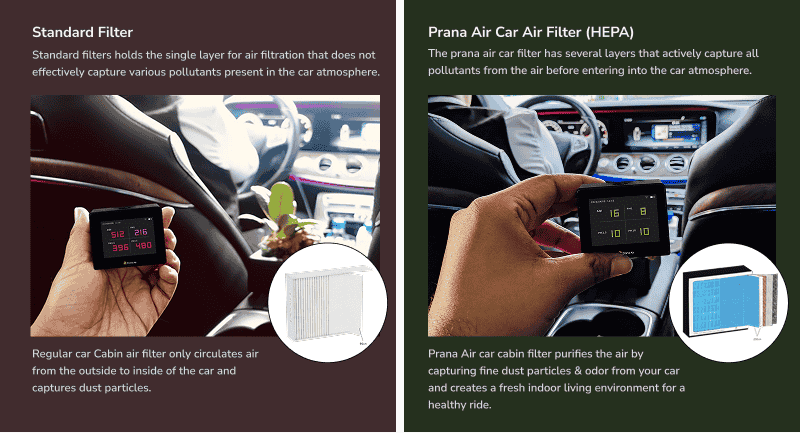
Most factory fitted Indian car air filters are basic at best. They stop large particles but do not handle fine pollution like PM2.5 very well. This is why many drivers choose upgraded multi-layer options. One such example is the Prana Air Car Cabin Filter which uses layered filtration and activated carbon to handle both fine particulate matter and traffic related odour.
Do Cabin Filters Actually Work
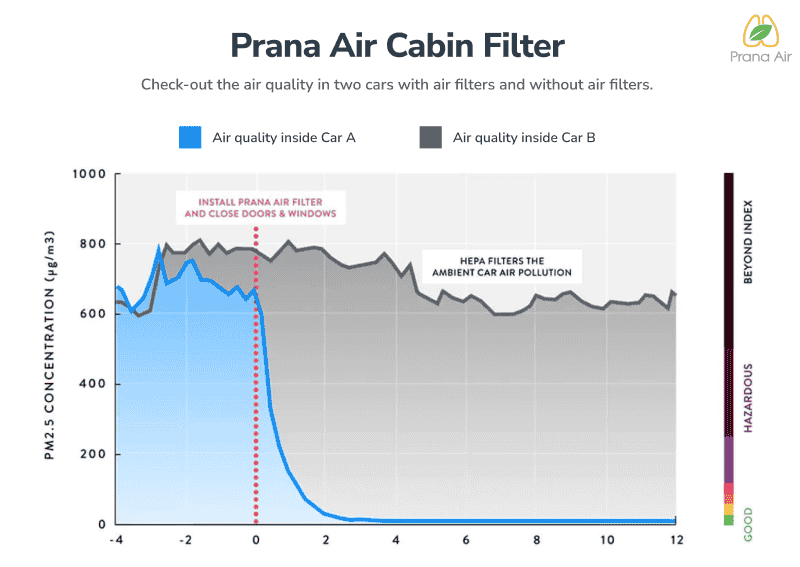
Yes. They do not make the air perfect, but they make it noticeably better. Real world usage shows that a good filter can reduce PM2.5 inside the car by around 30 to 55 percent. This improvement becomes stronger with recirculation mode since the system brings in less outside air.
Drivers often feel this difference without measuring anything. The air feels lighter, fumes do not rush in instantly and people with allergies usually experience less irritation. Filters designed for Indian pollution, such as the Prana Air option mentioned above, tend to perform consistently in dusty and high traffic zones.
Where Cabin Filters Fall Short
Cabin filters can reduce:
- dust, soot and larger particles
- a portion of fine particulate matter
- smoke and odour if the filter includes activated carbon
Cabin filters cannot fully stop:
- harmful gases
- very fine particles during extreme smog
- pollution entering through open windows
- pollutants once a filter becomes clogged
These limitations exist for all types of cabin filters. The difference is how efficiently they handle India’s heavy dust load.
Which Car Air Filter Should You Choose
Your choice depends on where you drive.
A basic filter may be fine for smaller towns.
In metro cities with continuous dust, construction and emissions, an upgraded filter makes the cabin feel noticeably cleaner.
Filters built for Indian roads, such as the Prana Air Car Cabin Filter, focus on capturing fine particles and everyday traffic odour. The improvement is subtle but steady and becomes easier to notice over long drives.
Here is your keyphrase appearance number two: A high quality car air filter also supports better AC airflow since a cleaner filter allows air to move smoothly through the system.
When Should You Replace Your Filter
India’s pollution clogs filters quickly. A practical replacement schedule is every six to eight months or between eight thousand and ten thousand kilometres.
If you notice weak AC airflow, musty smell when starting the AC or dust settling inside even with windows closed, the filter likely needs replacement. Even high-capacity options work best when maintained regularly.
Do You Need a Purifier Along With a Cabin Filter
Not always. A cabin filter blocks pollution from entering the car, while a purifier cleans what is already inside. For most months, a good filter and recirculation mode are enough. During severe smog, a purifier adds support, but the cabin filter remains the first barrier against outside air.
Why Car Air Filters Matter in India
Pollution comes from multiple sources in India such as dust, vehicle exhaust, construction activity and seasonal smoke. A moving car constantly pulls in outside air. Without a proper filter, this polluted air enters directly into the cabin.
A good car air filter cannot create mountain fresh air, but it reduces exposure significantly. For people who spend long hours driving, this improvement adds up. Breathing becomes easier, the cabin stays cleaner and the overall driving experience feels calmer.
Final Thoughts
A car air filter may look like a small component, but it influences how clean the air inside your car feels. It softens dust, reduces fumes and limits fine particles. While it is not a complete solution to pollution, it makes daily commuting healthier and more comfortable. Choosing the right filter and replacing it on time keeps the air inside your car noticeably better.

 Nandini