 Gyane Haobijam
You set an alarm for 6 AM, lace up your shoes, and head out for a morning walk. Virtuous. Healthy. Back home breathing hard from the effort, certain you have done something good for your body.
What the AQI app on your phone would have told you — had you checked it — is that between 5 AM and 8 AM, your neighbourhood’s PM2.5 level was sitting at 180 µg/m³. Nearly twelve times the WHO safe limit of 15 µg/m³. For every deep, effortful breath you took on that walk, your lungs pulled in a denser cloud of fine particles than you would have encountered sitting still indoors.
This is not meant to alarm you. It is meant to make a single point: air pollution in Indian cities is not a background constant. It peaks and dips across the day in predictable rhythms — driven by traffic, temperature, cooking, sunlight, and wind. And the gap between how most people think about air quality (check the forecast, go out anyway) and how pollution actually behaves (it spikes six times a day in different places) is where most of our cumulative exposure accumulates.
This guide maps that full twenty-four hours — what you are breathing at each stage of your day, why, and what you can do about it. No vague advice. No generic warnings. Just a practical, hour-by-hour framework designed for people living in Indian cities.
Why Your Pollution Exposure Changes Every Hour
Most people check air quality once, if at all. They glance at a city-level AQI reading in the morning and make a binary decision: safe or not safe. But that number is an average across a wide area, and it masks enormous variation — variation across neighbourhoods, across microenvironments (your car, your kitchen, your office), and across time.
The World Health Organization estimates that ambient air pollution causes approximately 4.2 million deaths annually worldwide, with South Asia bearing a disproportionately high share of that burden. India’s State of Global Air 2024 report found that air pollution was the second leading risk factor for premature death in the country. These are not numbers generated by single exposure events. They are the result of cumulative daily exposure — accumulated breath by breath, room by room, hour by hour.
PM2.5 — fine particulate matter smaller than 2.5 micrometres — is the most clinically significant of the common air pollutants. It is small enough to bypass the nose and throat entirely, lodge deep in lung tissue, and enter the bloodstream. But PM2.5 is only one piece of a daily exposure picture that also includes nitrogen dioxide (NO₂) from traffic and gas stoves, carbon monoxide (CO) from incomplete combustion, ground-level ozone (O₃) formed by sunlight acting on traffic exhaust, volatile organic compounds (VOCs) off-gassing from furniture and paints, and carbon dioxide (CO₂) that builds up in poorly ventilated indoor spaces.
Each of these peaks at a different time of day. Understanding when means you can start protecting yourself with timing and behaviour changes that cost nothing — before reaching for any product at all.
5–8 AM: The Most Dangerous Window You Don’t Know About
There is a meteorological phenomenon that operates in Indian cities every winter morning, and it is responsible for the single most dangerous air quality window of the day: temperature inversion.
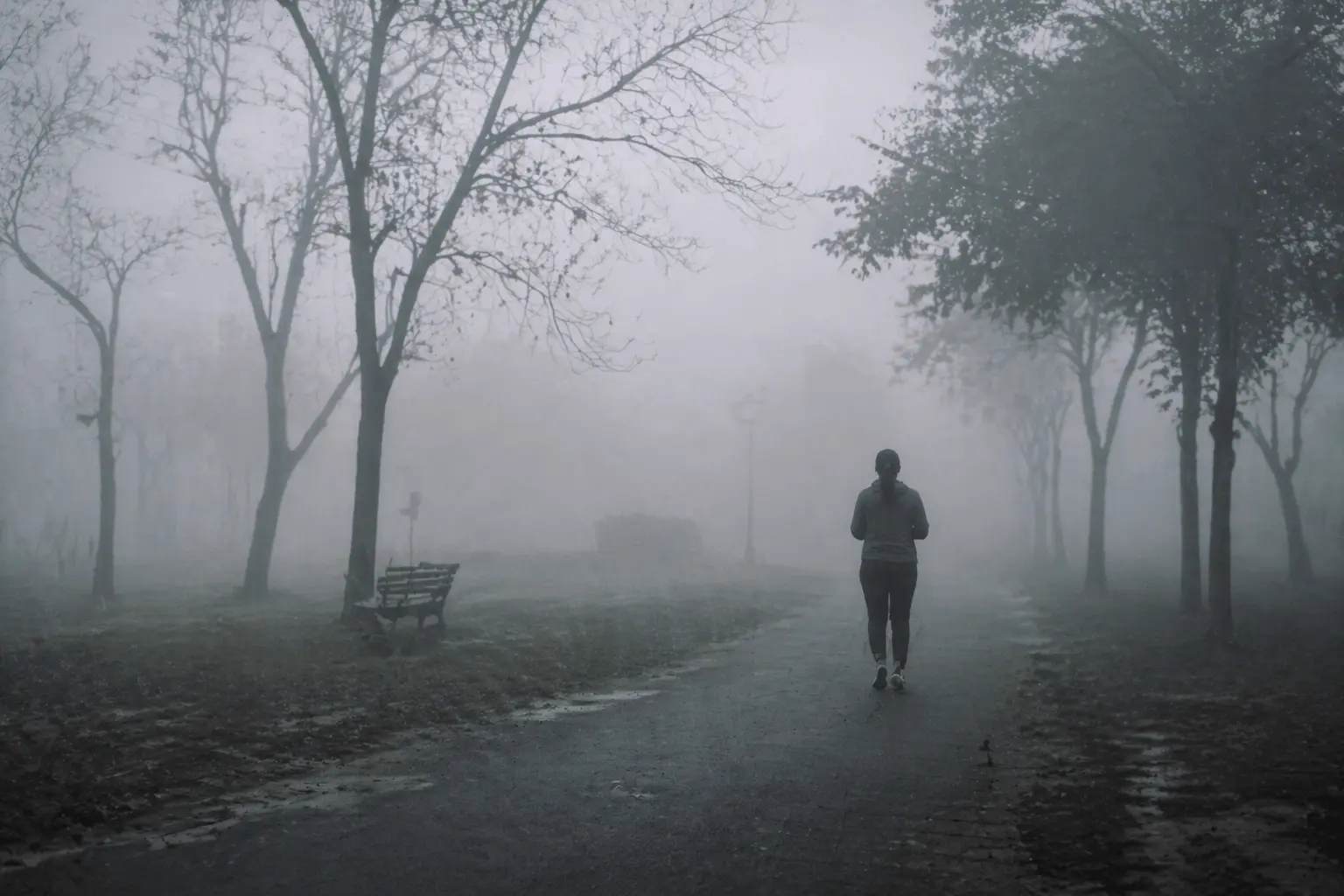
Normally, warm air rises and carries pollutants upward with it. In a temperature inversion, a layer of warm air sits above cooler surface air, acting as a lid. Pollutants emitted overnight — from diesel generators, brick kilns, vehicles, and construction fires — cannot escape. They accumulate at ground level through the night and into the early morning, peaking at around 5–7 AM, before the sun heats the surface enough to break the inversion and let pollutants disperse.
This is why a 6 AM morning walk in Delhi in November or December is not the health activity it appears to be. The roads are quiet. The sky looks clear. But the air at that hour can carry PM2.5 concentrations that rival the worst-polluted afternoons — sometimes worse, because the calm wind means nothing is clearing.
What to do:
- Check a real-time AQI source (AQI.IN shows hourly data) before stepping out, not a daily forecast.
- In winter months, delay outdoor exercise to after 9 AM when inversion typically breaks.
- If you must go out early, wear an N95 or N99 mask. Standard surgical masks do not filter PM2.5.
- Keep the Prana Air Pocket PM2.5 Monitor in your bag. A real-time reading at your location tells you far more than a city-average.
7–9 AM: Your Car Is Making It Worse, Not Better
The morning commute is the second major exposure window — and one where behaviour makes an enormous difference.
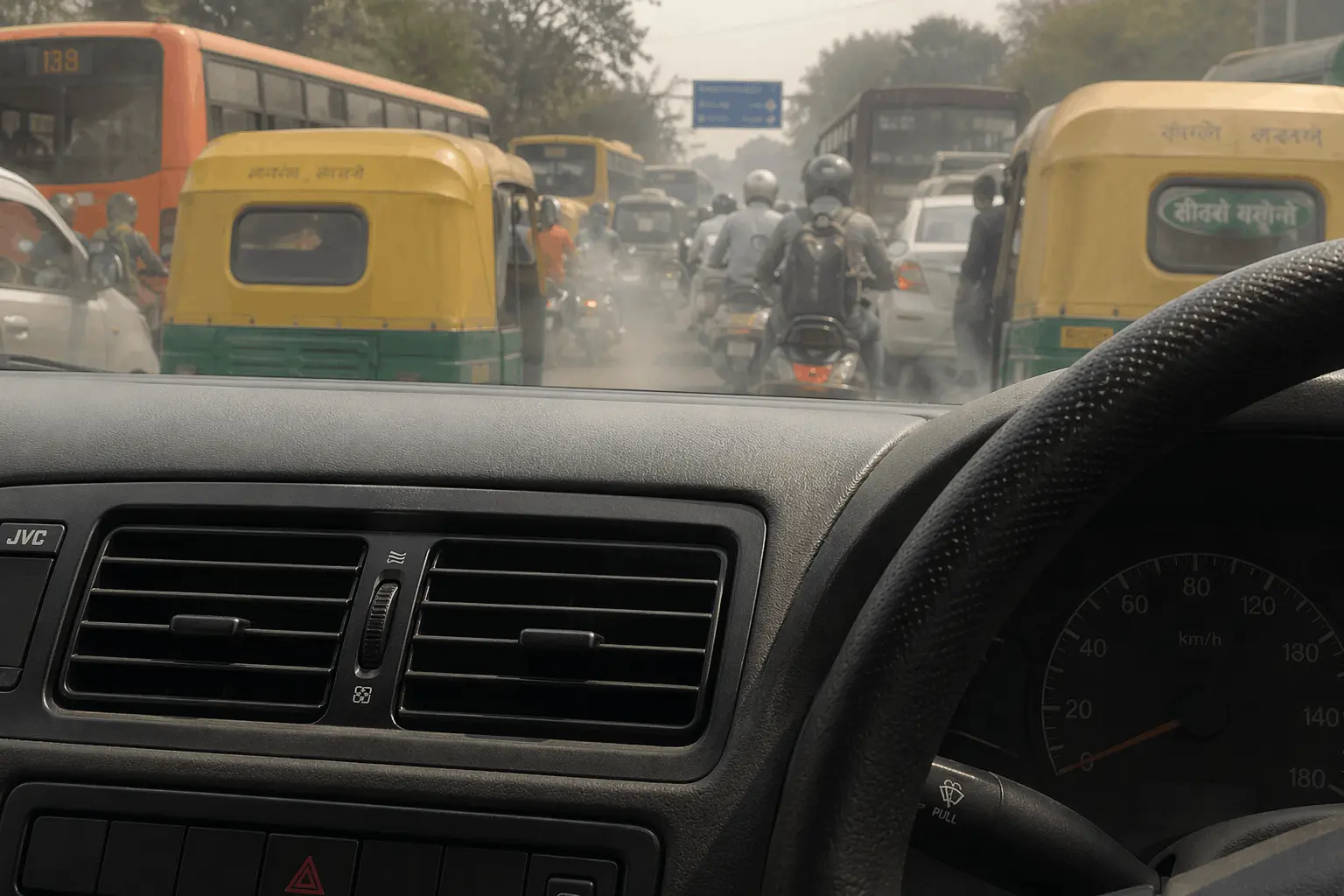
A widely referenced body of research on in-vehicle air pollution has found that PM2.5 concentrations inside cars stuck in traffic can be two to five times higher than roadside concentrations outside the vehicle. The reason is the car’s air intake: positioned at bumper height, it draws directly from the exhaust plumes of the vehicle immediately ahead. When the air conditioning is set to recirculate (the closed-loop mode most people use), those pollutants become trapped inside the cabin with no dilution.
NO₂ from diesel engines peaks during the morning traffic surge in Indian cities. For commuters spending thirty to sixty minutes in slow-moving traffic each morning, the cumulative NO₂ dose can rival that of someone standing at a busy intersection for the same duration.
Two-wheeler commuters face higher exposures still — positioned at exhaust height with no cabin at all — and metro commuters face PM accumulation inside enclosed stations, particularly underground sections.
What to do:
- Set your car’s AC to fresh air mode (not recirculate) when traffic is moving. Switch to recirculate only when stationary in very heavy traffic — counterintuitive, but it limits the spike during the worst plumes.
- Replace your car cabin air filter every 15,000–20,000 km or annually. A clogged filter provides almost no PM protection. The Prana Air Car Cabin Filter is rated for both PM2.5 and PM10.
- Two-wheeler riders: an N95 mask is the single most effective protection measure available. Ensure a proper seal around the nose and cheeks — gaps negate most of the benefit.
- For metro commuters: masks are most valuable in underground, poorly-ventilated sections.
9 AM–12 PM: The Office Air Trap
You reach the office, sit down at your desk, and spend the next three hours in a sealed, air-conditioned environment. This feels like a relief from the outdoor pollution. In many cases, it is not.
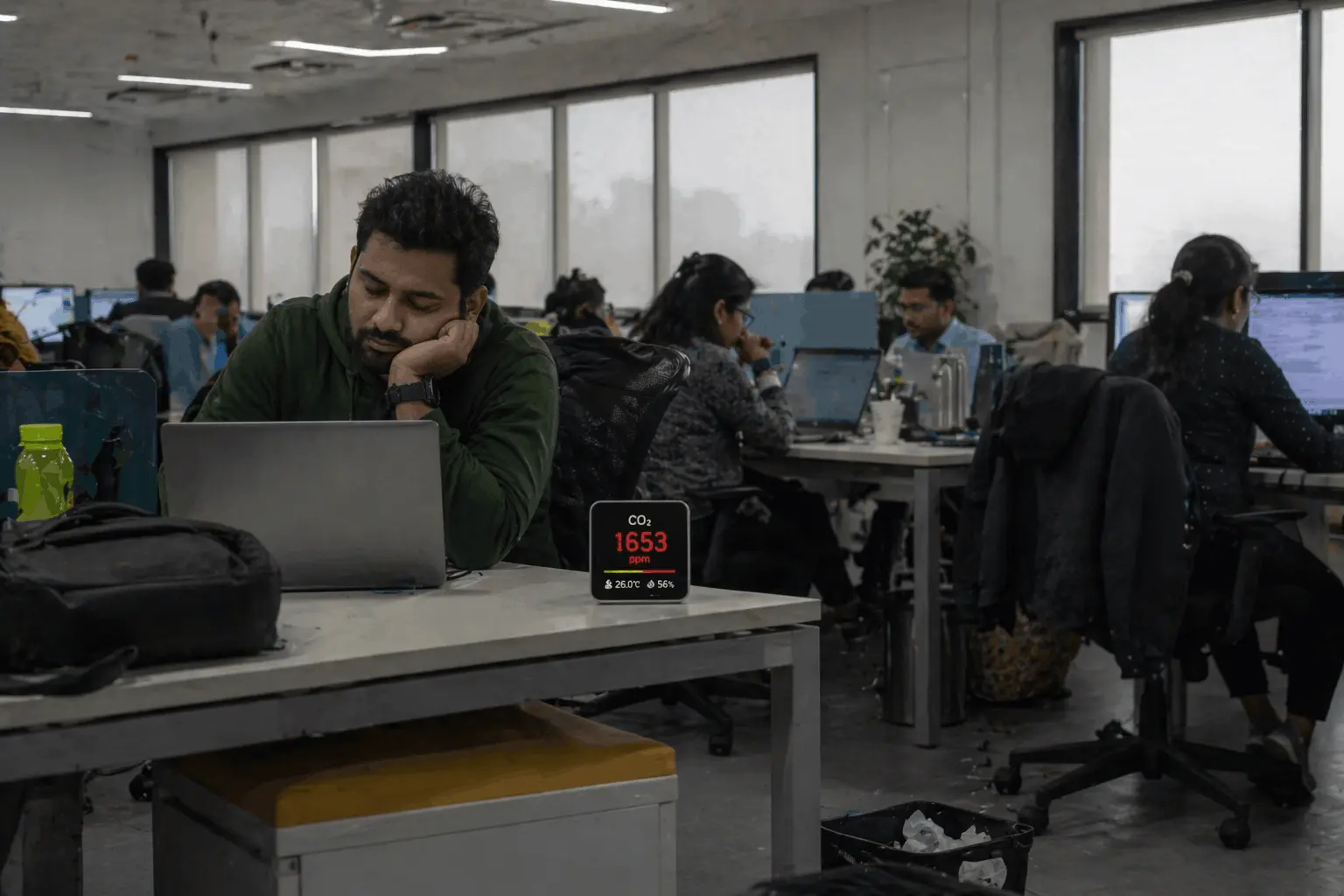
A 2015 Harvard T.H. Chan School of Public Health study found that cognitive performance scores fell significantly when CO₂ levels exceeded 1,000 ppm. By mid-morning in a typical Indian shared office — sealed windows, central AC, twenty to thirty people breathing in an enclosed space — CO₂ levels routinely climb above this threshold.
CO₂ at these concentrations does not cause direct respiratory harm. What it does cause is a measurable decline in decision-making ability, reduced concentration, and the mid-morning fatigue that most people attribute to their second cup of coffee wearing off.
Beyond CO₂, modern offices carry a secondary pollutant load from VOCs: formaldehyde and benzene off-gassing from MDF furniture and particleboard, toluene from printer toner, and a cocktail of compounds from cleaning products and synthetic carpeting. These are present at low concentrations individually but accumulate over an eight-hour workday.
What to do:
- Ventilate before occupancy. If you arrive before colleagues, open windows for fifteen minutes. This is the single most effective intervention.
- Place a Prana Air Nano CO₂ Monitor on your desk. When it reads above 1,000 ppm, open the nearest window. Above 1,500 ppm, move to a better-ventilated space for your most critical work.
- Avoid placing your desk directly adjacent to a laser printer — the particulate output during a print run is measurably elevated.
- Potted plants can modestly supplement air quality, but do not rely on them as a primary intervention in a sealed office. They work best as a complement to ventilation.
12–3 PM: The Ozone Window You Didn’t Expect
Most discussions of Indian air pollution focus on winter particulate matter. Far less attention goes to summer ozone — and that gap in awareness translates directly into avoidable exposure.
Ground-level ozone (O₃) is not emitted directly by any source. It is formed when nitrogen dioxide from vehicle exhaust reacts with volatile organic compounds in the presence of ultraviolet radiation. The chemical reaction requires sunlight, which is why ozone concentrations peak in the afternoon — typically between noon and 3 PM — and are highest in summer.
Unlike PM2.5, which accumulates in the lungs, ozone is a reactive gas that directly irritates airway tissue. Short-term exposure causes chest tightness, coughing, and reduced lung function. For people with asthma, it is a significant trigger. The Delhi summer months of April through June can see O₃ levels that exceed national ambient air quality standards.
The post-lunch walk is the most common high-ozone exposure window for office workers. Heading outside between 12 and 3 PM in a city in summer, for what feels like a healthy outdoor break, often means the highest ozone dose of the day.
What to do:
- Check ozone-specific AQI sub-indices (not just overall AQI) during summer months. The AQI.IN app displays pollutant-specific readings.
- For outdoor lunch breaks in April–June, earlier (before noon) or later (after 3:30 PM) significantly reduces ozone exposure.
- People with asthma or respiratory conditions should be most cautious about the 12–3 PM outdoor window in summer.
- Indoor AQI monitors will not capture outdoor ozone unless they have an O₃ sensor — another argument for real-time outdoor checks before stepping out.
3–6 PM: Use This Window
This is good news. The mid-to-late afternoon is, in most Indian cities on most days, the safest outdoor window of the day.
After noon, solar heating increases surface temperatures. Warm air rises, the temperature inversion is long broken, and wind speeds are typically higher. This combination disperses ground-level particulates effectively. Traffic volumes are lower than morning peak. Industrial emissions from the previous night have cleared. And the ozone formation cycle begins to slow as UV angles decline.
For parents choosing when to send children out to play, for older people deciding on a walk, for runners and cyclists trying to get their training volume in without respiratory cost — this is the window to use.
The exception list is short but real: summer dust storms (especially in North India in May–June), neighbourhoods immediately adjacent to industrial areas or construction sites, and days with incoming weather fronts that suppress dispersion.
What to do:
- Schedule outdoor physical activity between 3 and 6 PM when possible. Even if this means a shorter session, the reduced PM exposure over time is meaningful.
- Schools should consider scheduling outdoor sports and physical education in this window rather than the morning.
- On days with visible dust or unusual haze, check AQI regardless of time.
6–8 PM: Two Spikes Collide in Your Home
Evening is where the daily pollution story gets most complicated — and most consequential for families.
Outside, traffic volumes rebuild as the city returns home. Temperature begins to drop after sunset, progressively suppressing dispersion and allowing PM2.5 to accumulate again. In North Indian cities, the period from 6 PM to 10 PM in October through February produces some of the worst hourly AQI readings of the year.
Inside, something separate and often worse is happening: cooking.
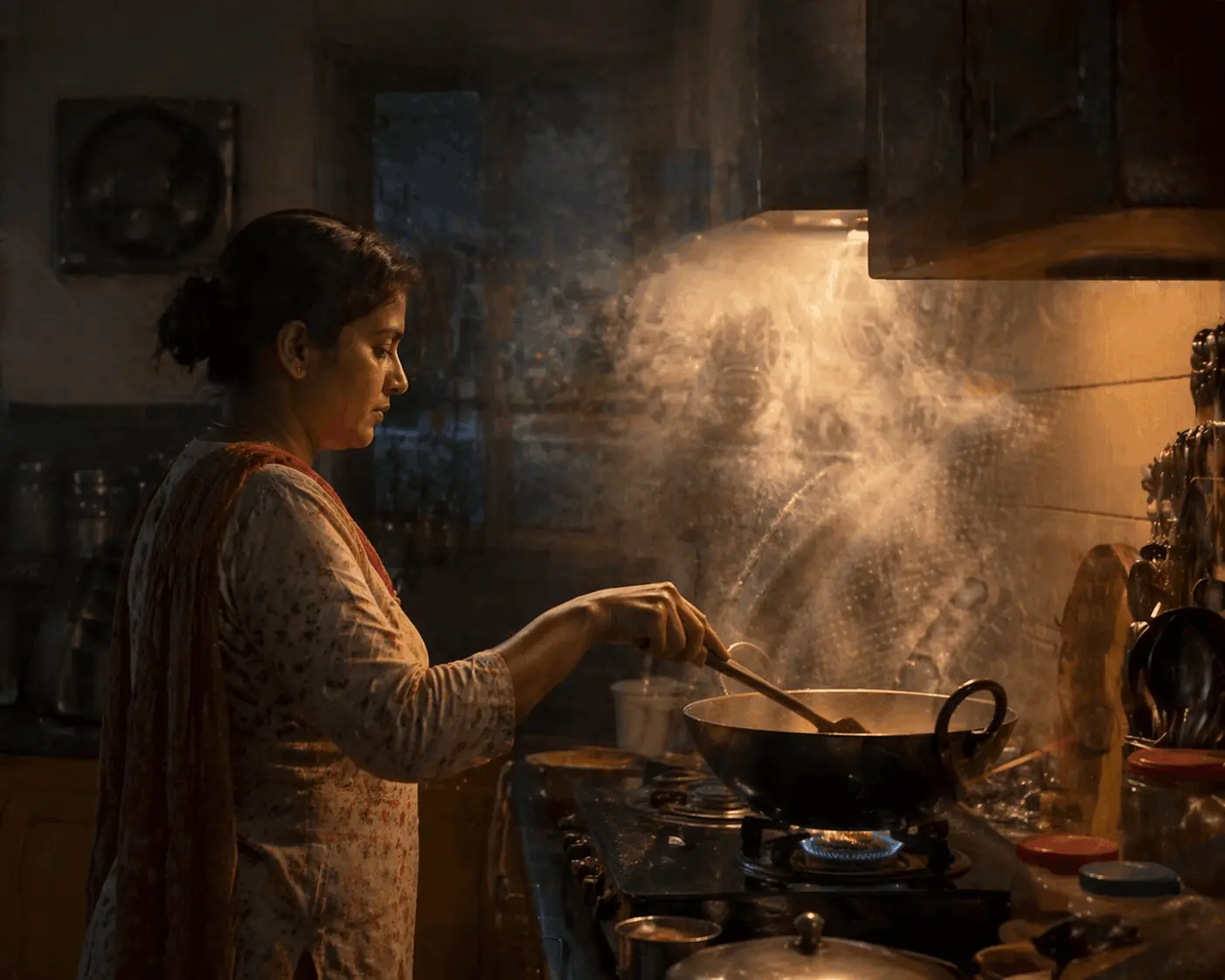
Indian cooking — gas stoves burning at high heat, mustard oil or coconut oil at smoking temperatures, pressure cookers releasing steam, bread and roti on direct flame — produces a substantial indoor pollutant load. Research studies measuring air quality inside Indian homes during cooking have recorded PM2.5 levels of 200 to 400 µg/m³ in kitchen and adjacent dining spaces. For context, Delhi’s outdoor AQI is described as ‘hazardous’ at PM2.5 above 250 µg/m³. During a typical Indian dinner preparation, your kitchen can be more hazardous than the most polluted outdoor day of the year.
The gas stove itself adds to this picture. Natural gas combustion produces NO₂. A WHO analysis of gas stove emissions found that unventilated cooking with gas can raise indoor NO₂ to levels that exceed outdoor WHO guidelines within thirty minutes of cooking.
What to do:
- Run the kitchen exhaust fan throughout cooking and for ten minutes after — not just when there is visible smoke.
- Open a window in an adjacent room to create cross-ventilation while cooking. This matters more than the exhaust fan alone.
- Place an indoor air quality monitor in your kitchen or dining area. Prana Air CAir+ Monitor tracks PM2.5, CO₂, TVOC, temperature and humidity in real time, with a display that makes it easy to see when ventilation is needed.
- For families where someone cooks for extended periods daily, a kitchen-adjacent monitor that can alert when PM2.5 exceeds a threshold is a meaningful long-term health investment.
- Reduce the use of high-smoke-point frying (mustard oil at maximum temperature) where possible, particularly during high-AQI winter days when additional outdoor ventilation compounds the exposure.
9 PM–6 AM: Your Bedroom Is an Eight-Hour Exposure
The night hours are the longest single block of time most people spend in any one indoor microenvironment. They are also among the most overlooked when thinking about pollution exposure.
There are two competing dynamics in bedroom air quality at night.
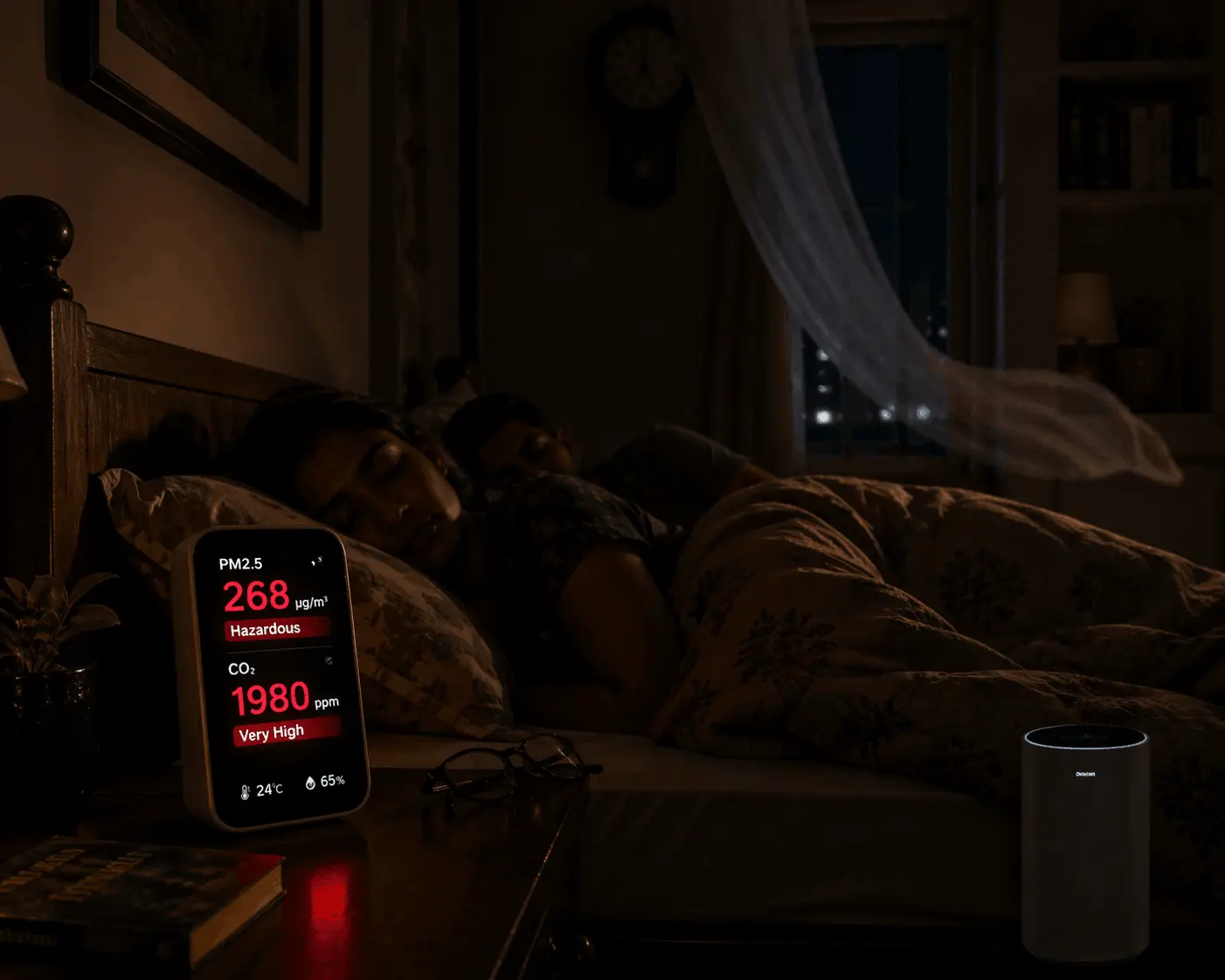
If windows are closed, VOCs from synthetic bedding, mattress foam, particleboard furniture, and wall paint accumulate over the night. These compounds — formaldehyde, benzene, toluene — are present at low concentrations from new furniture, and the concentration builds slowly in a sealed space over several hours. This is not an acute exposure problem; it is a chronic low-level one.
If windows are ajar — the instinct of many people who want fresh air — outdoor PM2.5 drifts in throughout the night, particularly in winter when outdoor concentrations are elevated. By 3–4 AM, a bedroom with a partially open window in Delhi winter can have PM2.5 concentrations matching or exceeding outdoors.
Neither option is ideal without intervention. And sleeping itself amplifies the risk slightly, because deeper breathing during sleep increases the volume of air — and particles — taken in per hour compared to wakeful rest.
Research published on sleep and air quality has found associations between elevated bedroom PM2.5 and reduced sleep efficiency, increased nighttime awakenings, and next-day fatigue. This is covered in more detail in our piece on PM2.5 and insomnia.
What to do:
- Run a HEPA air purifier in the bedroom for one to two hours before sleep and throughout the night if possible. This is the most effective single intervention for bedroom air quality.
- If you use an air purifier, you can keep windows closed without the VOC build-up concern — the HEPA filter handles particles, and the air exchange created by the purifier’s fan also dilutes gaseous pollutants moderately.
- Place a monitor in the bedroom. Prana Air CAir+ Monitor can log overnight readings so you can see the pattern — whether your current window-open or window-closed approach is actually working.
- For children’s rooms in particular, bedroom air quality monitoring is a high-priority setup. Children breathe at a higher rate relative to body weight than adults, and spend more hours sleeping.
Your Morning-to-Night Protection Checklist
This is a summary of all the above as a practical daily reference. Save it, screenshot it, share it.
Before leaving home (5–8 AM)
- Check AQI.IN for your location — not just the daily forecast, the hourly reading.
- If PM2.5 > 100 µg/m³, wear an N95 mask outdoors.
- Delay outdoor exercise to after 9 AM in winter.
Morning commute (7–9 AM)
- Set car AC to fresh air mode.
- Check cabin air filter condition — replace annually.
- Two-wheeler riders: N95 mask, properly sealed.
At the office (9 AM–12 PM)
- Ventilate before colleagues arrive if possible.
- Monitor CO₂ — open a window when it exceeds 1,000 ppm.
- Step away from the printer area during large print jobs.
Midday outdoors (12–3 PM)
- In summer: avoid prolonged outdoor exposure in this window.
- Asthma or respiratory conditions: treat this as a high-risk period April–June.
- Schedule your outdoor break before noon or after 3:30 PM.
Afternoon exercise (3–6 PM)
- This is your best outdoor window. Use it.
- Check AQI before heading out — dust storms and unusual conditions still apply.
Evening cooking (6–8 PM)
- Exhaust fan on throughout cooking and ten minutes after.
- Open a cross-ventilation window in an adjacent room.
- Check kitchen monitor readings — if PM2.5 > 75 µg/m³, increase ventilation.
Bedroom night (9 PM–6 AM)
- Run HEPA air purifier before and during sleep.
- Keep windows closed when outdoor AQI is elevated.
- Monitor overnight readings to understand your pattern.
The Bottom Line
Air pollution is not a problem that exists only on smoky winter evenings or red-AQI days in the news. It is a daily accumulation — layered across a morning walk, a commute, a kitchen, an office, a bedroom — each adding to a cumulative total that, over months and years, shapes respiratory and cardiovascular health outcomes.
The good news is that the daily pattern is consistent and predictable. Understanding when your exposure peaks — and making small, timed adjustments to where you are and what you are breathing at those moments — can meaningfully reduce your total daily intake without disrupting your routine.
The next step is to see what is actually happening in your specific home, car, and office. Not city averages. Your air. Real-time, room by room.
Prana Air CAir+ Monitor tracks PM2.5, CO₂, TVOC, temperature and humidity simultaneously, with a clear display and app connectivity. It is the starting point for moving from general awareness to specific, actionable data about the air around you.
Because the best protection routine is one built on what your air actually looks like — not what the city average says it should be.
Sources referenced in this article: WHO Global Air Quality Guidelines (2021), State of Global Air 2024, Harvard T.H. Chan School of Public Health (COGfx study on CO₂ and cognition), CPCB National Ambient Air Quality Standards, IIT Delhi research on in-vehicle PM2.5 exposure.
Related reading:
- Can PM2.5 cause insomnia? The science behind air quality and sleep
- Do car air filters really work? A guide for Indian drivers
- Houseplants for indoor air quality: can they really help?
- How air quality affects children: air quality for kids guide 2025
- Breathing safe air: what you’d inhale without a mask
 Deepshikha