






Major Air Pollutants
Airports hold many kinds of air pollutants, and if no one keeps an eye on them, they can harm passengers, staff, and people who live nearby. That is why air monitoring matters inside and around every airport. A real-time system shows airport teams how much pollution each source adds and helps them meet the required standards.

PM2.5
Fine, breathable dust and water particles
CO2
Large numbers of passengers in one space

TVOC
Carpets, disinfectants, air fresheners, and more

Oxides (NOx, SOx)
Oxides released during airport operations

Viruses & Bacteria
Illnesses carried by travelers

Noise
Loud noise from large crowds of people
Who Is at Risk?
Heavy passenger traffic is a major reason for poor air inside airports. Air pollution puts some people at higher risk, including those with existing health problems, older adults, children, and other sensitive groups. Even healthy adults can feel sick after breathing bad air.

Existing Health Problems
Passengers and staff with a lung illness already have weaker lungs.

Security Staff
Airport security staff also breathe the polluted air inside the building.

Staff
Staff may lose focus, perform worse, and get sick more often.

Passengers
Even healthy passengers may feel uneasy or get headaches.

PM2.5
Heart and lung problems from breathing in particles
CO2
Trouble breathing, nausea, and convulsions

Noise
Stress, anxiety, high blood pressure, and headaches

Oxides
Coughing, choking, and tiredness after exposure

Virus & Bacteria
Infections spread easily through viruses and bacteria

TVOC
Headaches plus sore eyes, nose, and throat
Air quality Solutions
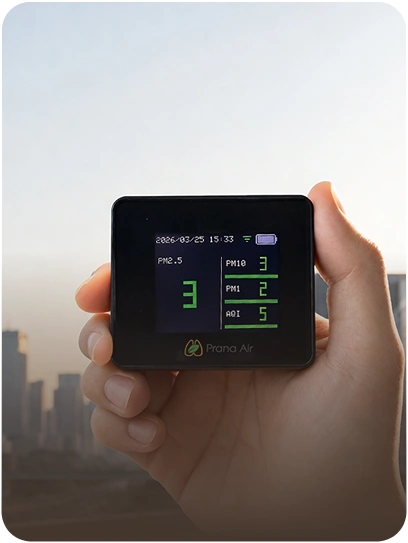
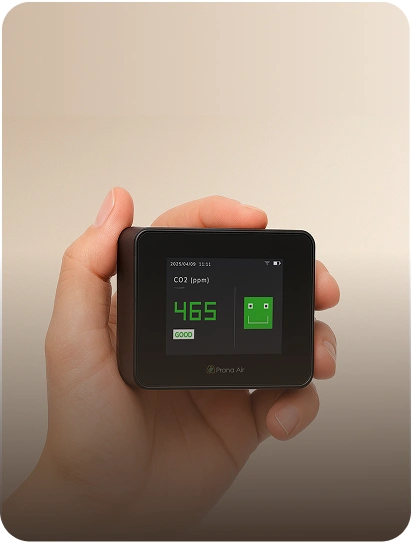
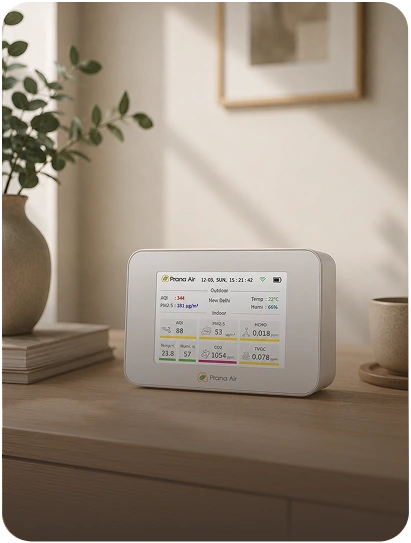
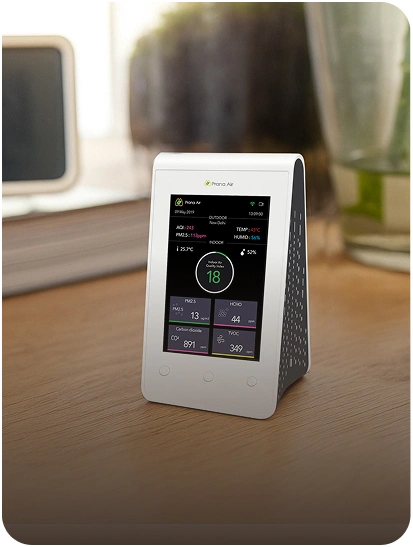
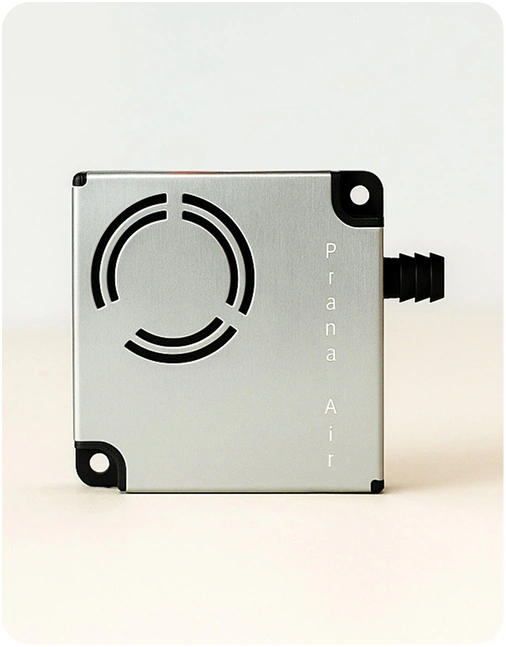
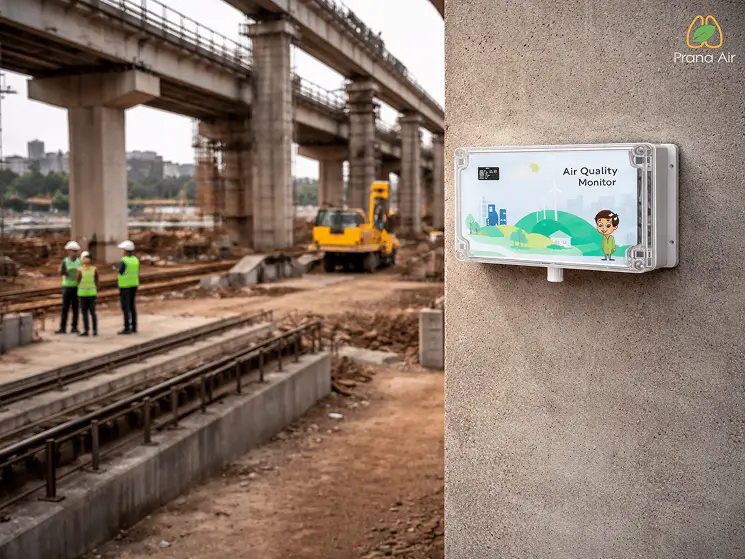
Air travel is growing fast, so it is now vital to track and control air pollution in and around airports. Prana Air air monitoring and air cleaning solutions show you what your passengers and staff breathe, so you can analyze IAQ in the terminal and on the plane.
 Air Quality Monitoring (Wi-Fi or GSM)
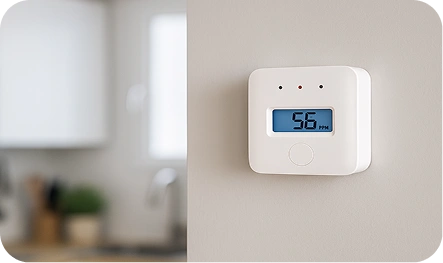
Prana Air offers smart indoor air quality monitors that connect over Wi-Fi and GSM.
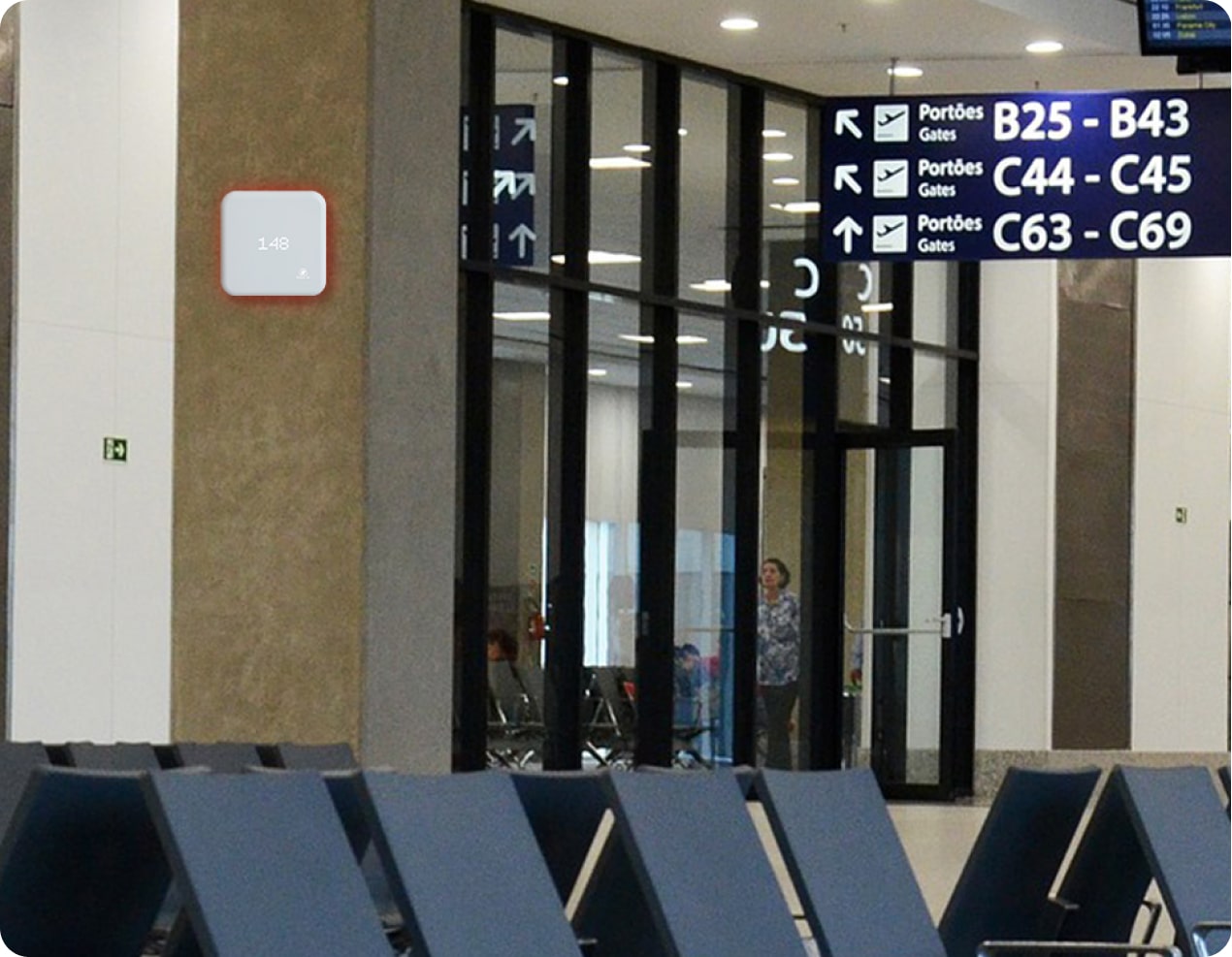

 Air Quality Monitoring (LoRa)
LoRa is a newer wireless standard that is built to send data a long way on very little power. LoRa is short for Long Range and it is made mainly for IoT networks, where many devices can share one network at the same time.
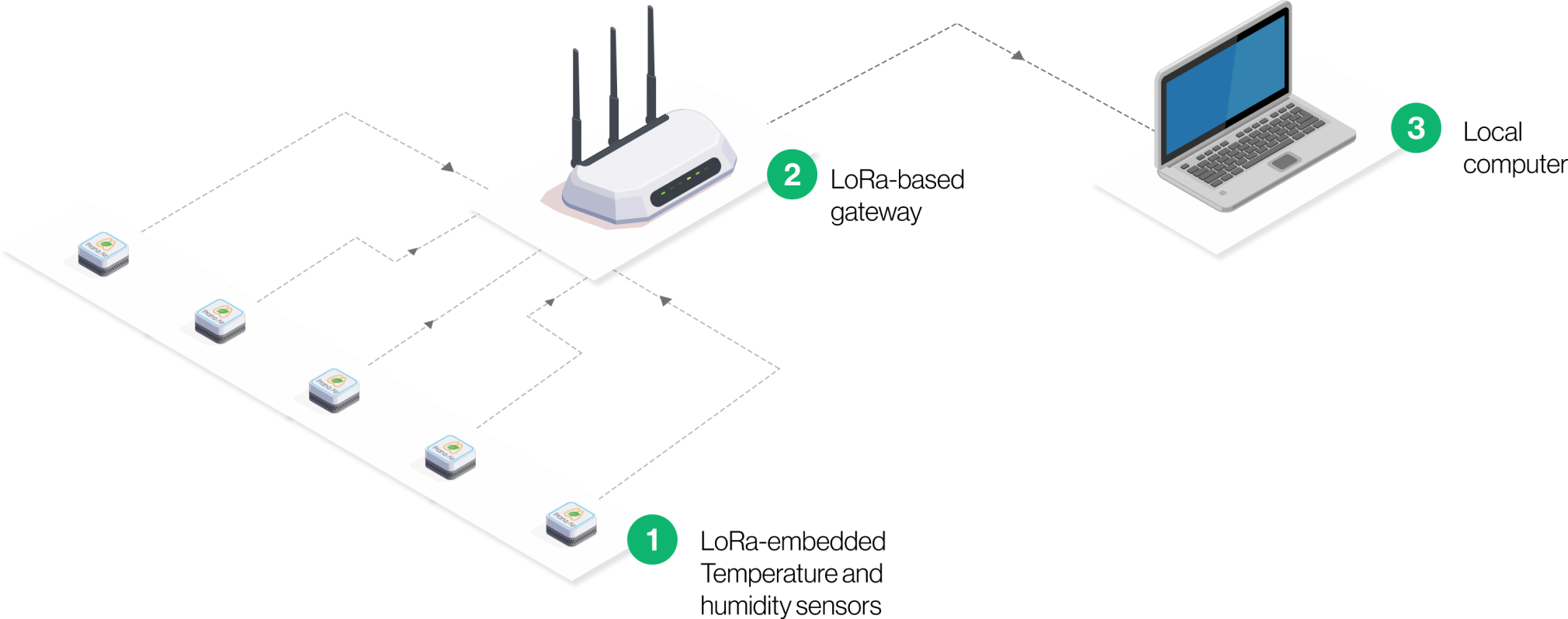
What Makes LoRa Different
Wireless communication

Connects up to 2000 nodes

IoT technology

Local area coverage

Signal range up to 5 km

Simple to install

Runs on a local server

No operating or recurring costs
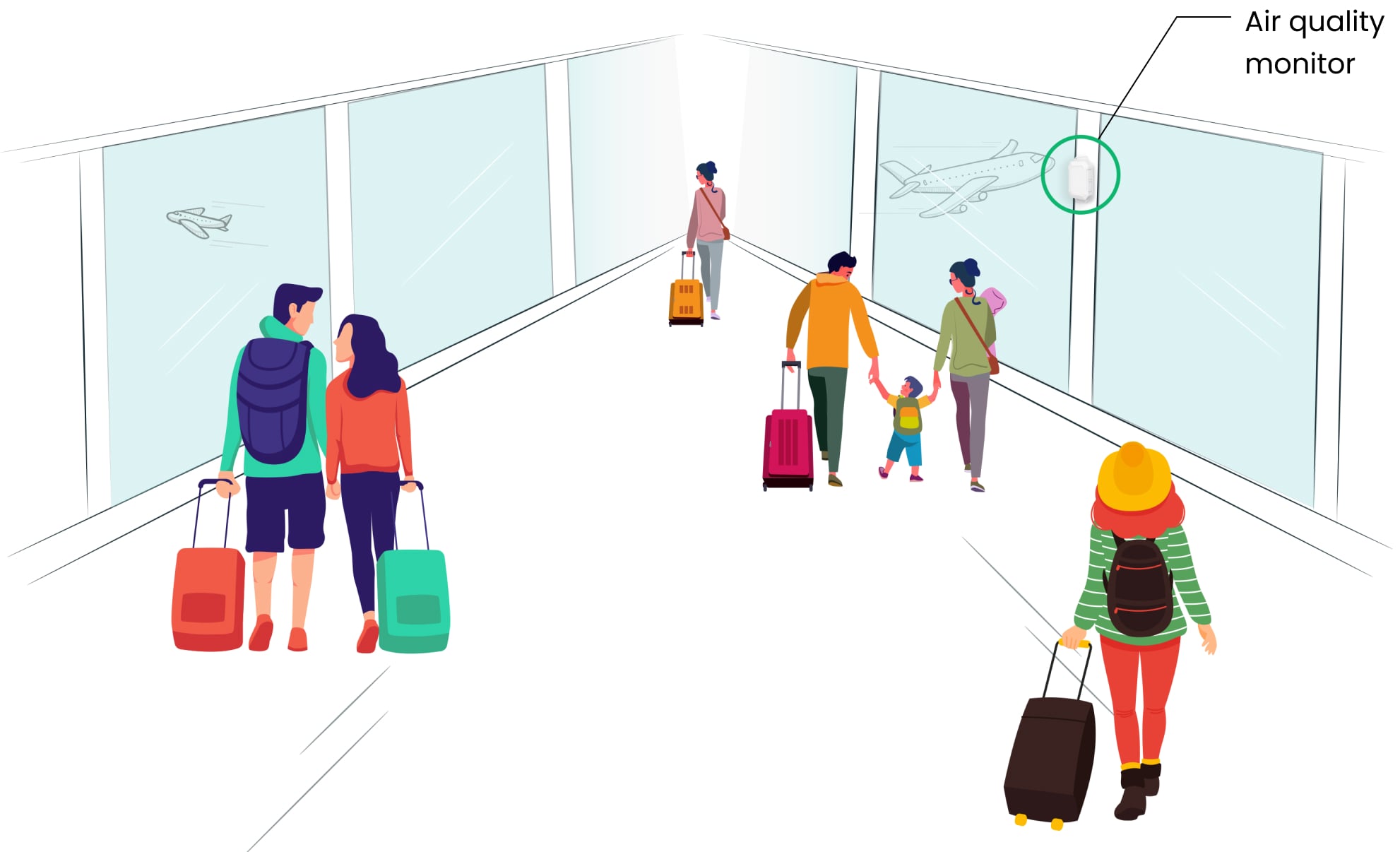
How Does LoRa Differ from Wi-Fi?
| Specifications | Wi-Fi | LoRa |
|---|---|---|
| 1. Range | Up to 30 m (approx.) | Up to 5000 m (5 km) |
| 2. Gateway | Connects only a few devices. | Connects up to 2000 nodes. |
| 3. Configuration | Must be set up again when the Wi-Fi password changes | Not needed |
| 4. Data Accessibility | Cloud storage | Local network or cloud storage |
| 5. Power Consumption | Very high | Very low |
| 6. Sustainable | No | Yes |
Data Freemium Services
Get real-time air quality data for the outdoor area nearby, right on the web. Use our API to add the airport's data to your website or app.
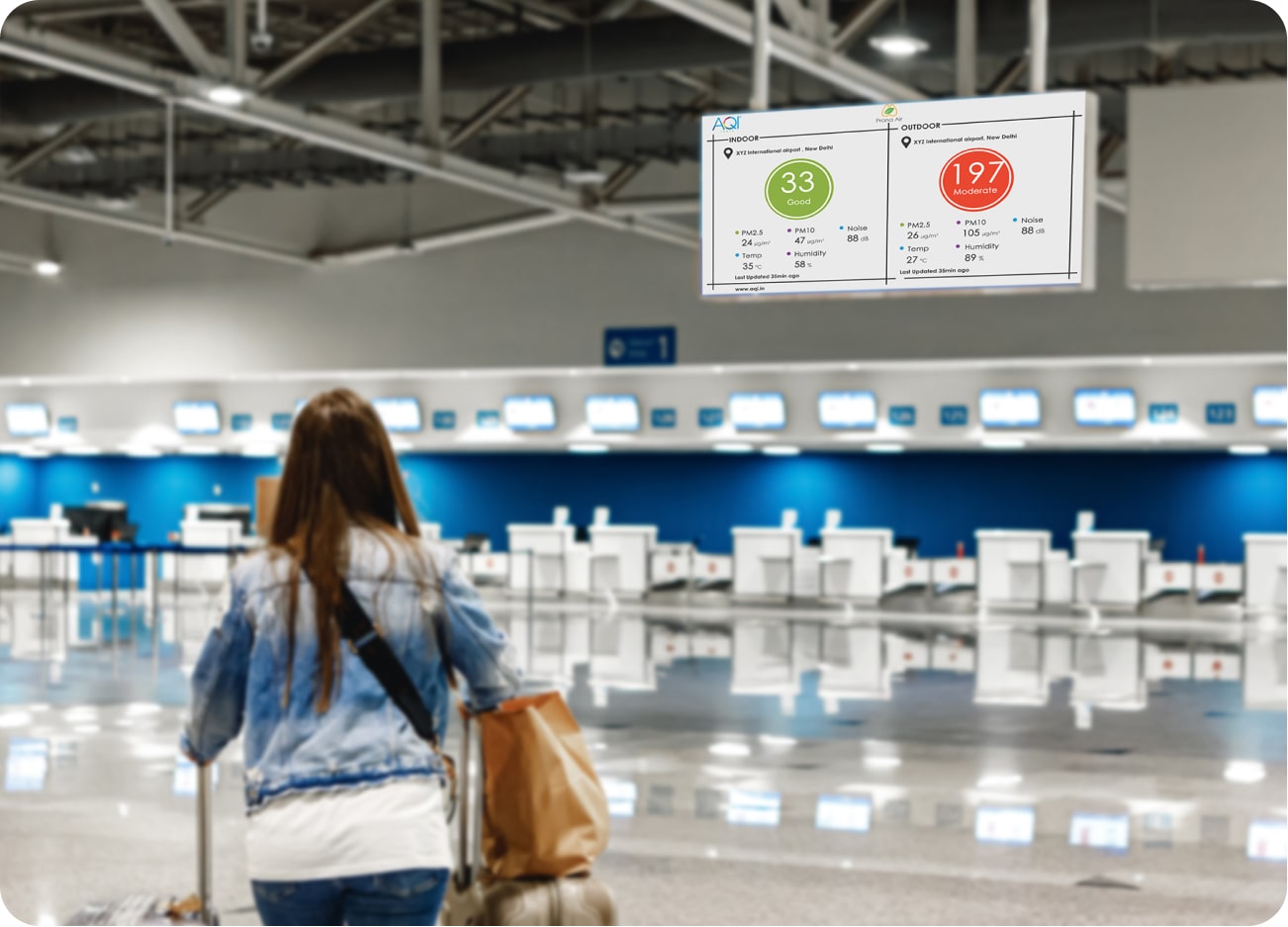
TV Dashboard App
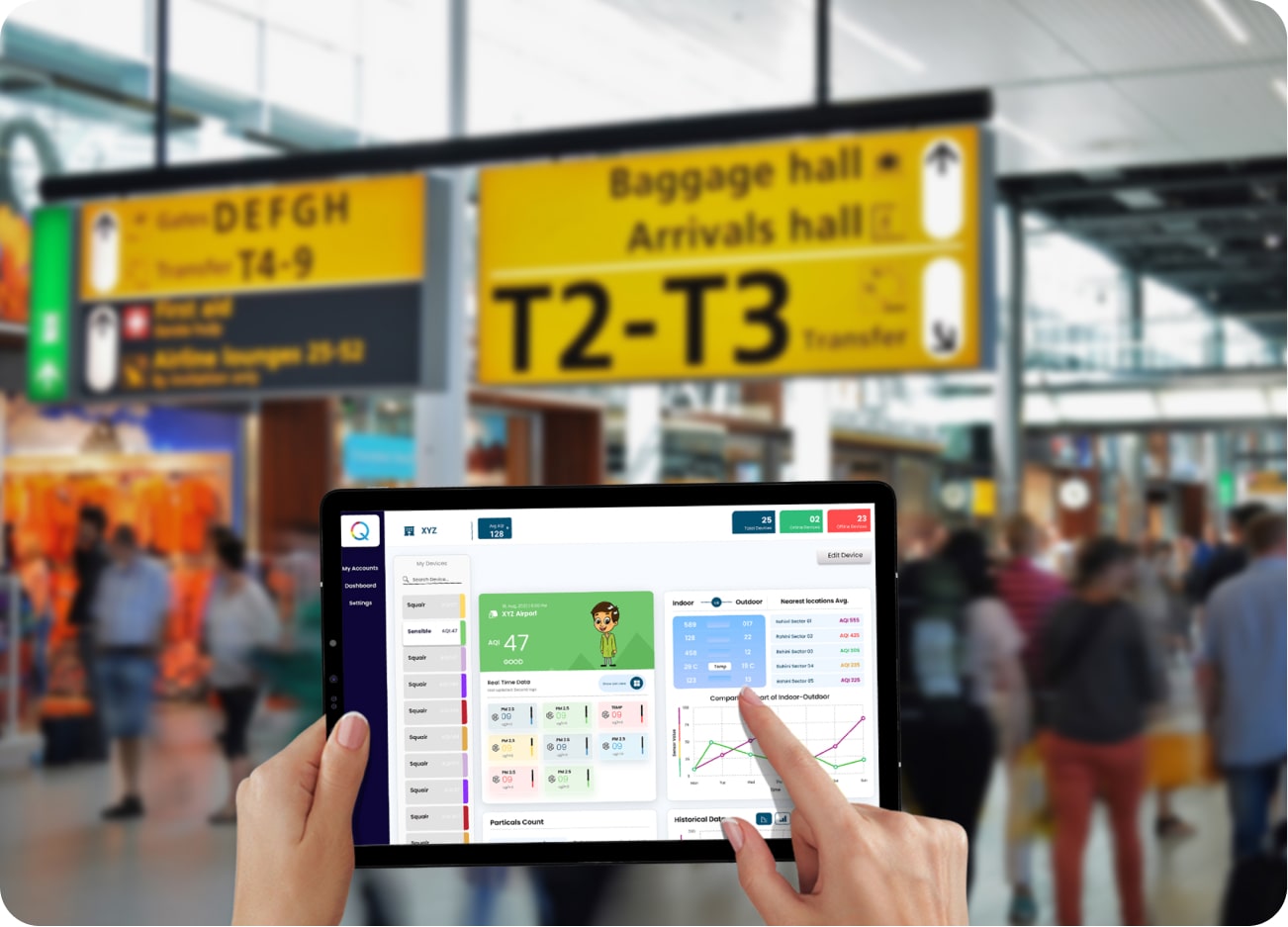
Web Dashboard & App for Airports
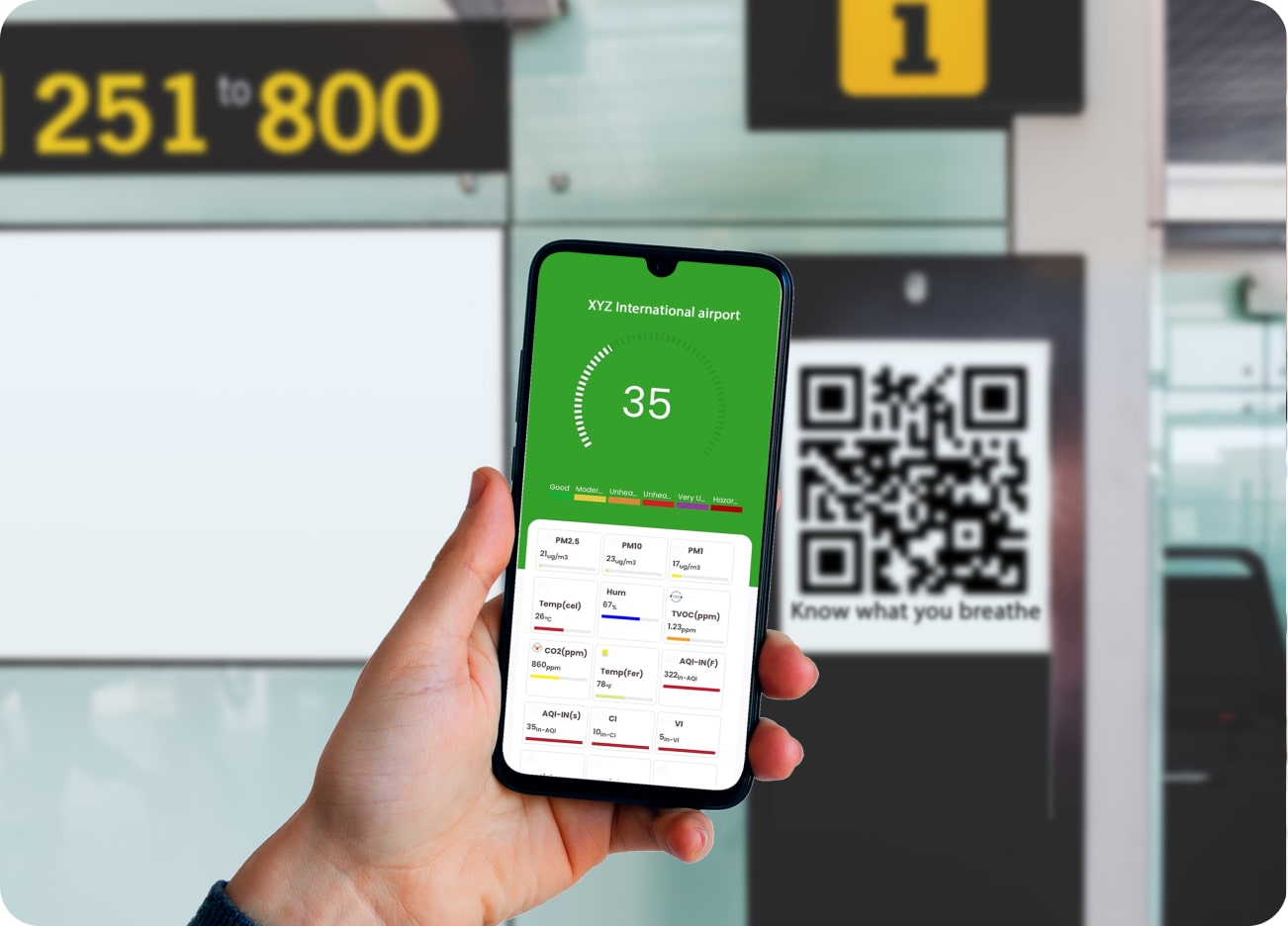
QR Code Scan
How Air Pollution Affects People -In Airports
Passengers and staff who breathe poor air can feel sick, dizzy, and generally unwell, and headaches are also a very common sign of exposure.
With Clean Air
- Better ventilation
- Good air quality
- A better experience
- Higher staff performance
Without Clean Air
- Poor customer experience
- Less comfort for passengers
- Lower staff performance
- Unhealthy air quality
Frequently Asked Questions
About air quality solutions for airports. Have questions? We're here to help.
Our Clientele
We're proud to work with so many well-known companies.












Get in Touch
Tell us what you need. Our team will get back to you very soon.
Industrial Applications
Big business or small, Prana Air has you covered. We offer a broad range of smart, low-cost, and highly accurate air quality solutions for many industries.


 Let’s Talk